

Nearly two decades in, Youth Art Exchange Executive Director Raffaella Falchi-Macias’ commitment to arts education remains as strong as ever.
Working for an arts nonprofit was not always Falchi-Macias’s career plan.
She taught for YAX while earning a a master’s degree in architecture from the California College of Arts. After being layed off during the Great Recession, she returned as the program director to help rebuild the program. She climbed the ranks to deputy director before landing in the executive director position in 2020.
“I realized how much I really loved working with high school students in particular, or just young people, and exposing them to a field like design felt really empowering,” Falchi-Macias said. “It was something that I wish I had had as a young person.”
Always on the first-generation American and Mission resident’s mind is accessibility to the arts. When she’s not in the office, she has spent part of her time for the last 20 years leading her group, the Sambaxé Dance Company, through San Francisco’s Carnaval parade and has designed and hand-crafted many of their costumes.
At YAX, she and her team have worked to bring more classes to younger children through programming such as day camps and to adults through free and paid-for-service community classes like screen-printing.
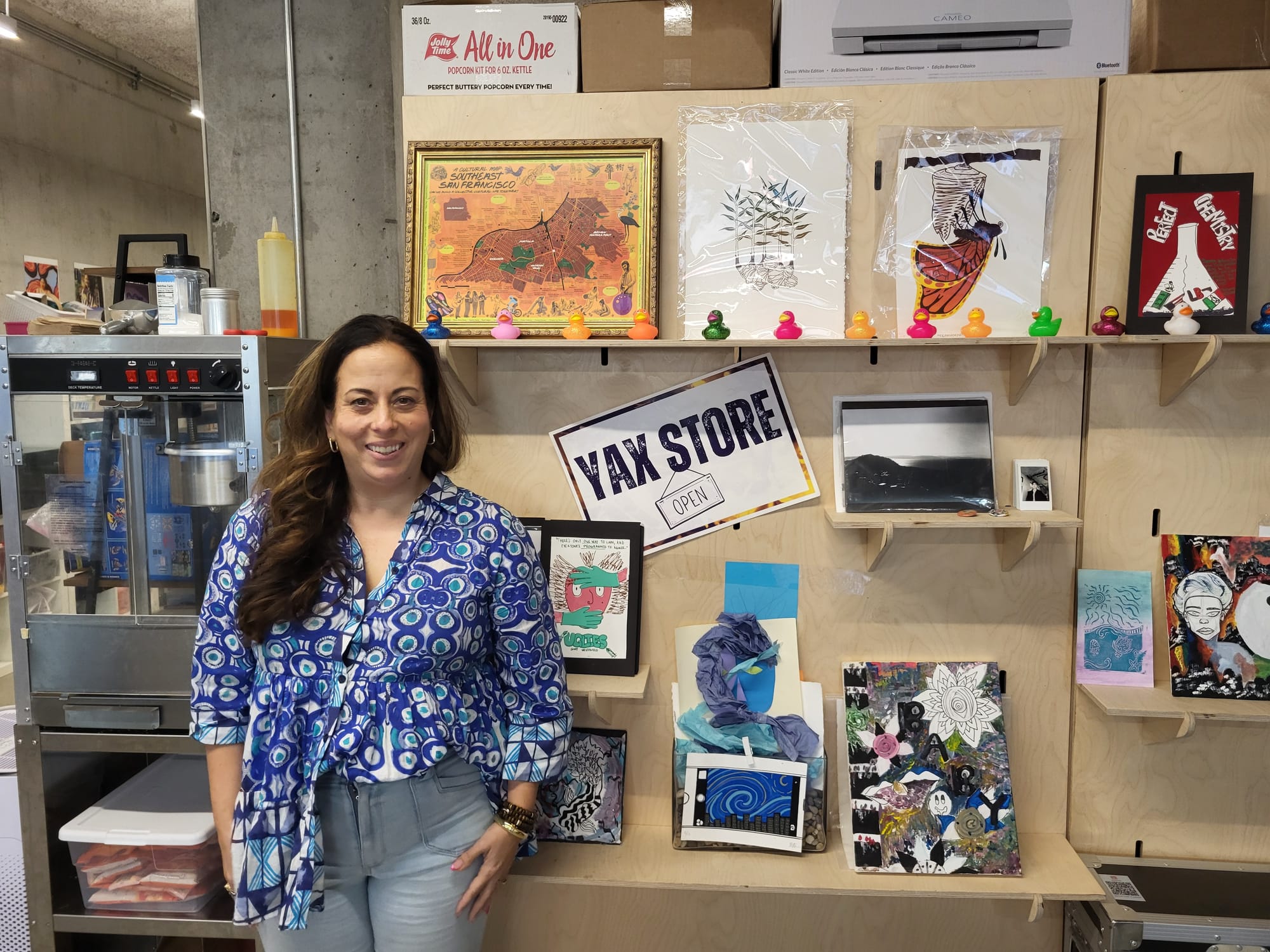
YAX was long hosted inside Lick-Wilmerding High School until it acquired its own space. It opened a gallery and workspace on Mission Street by Geneva Avenue. Most recently, it opened two spaces in housing developments, one on Mission Street and the other in Kapuso on the Upper Yard beside the Balboa Park BART station.
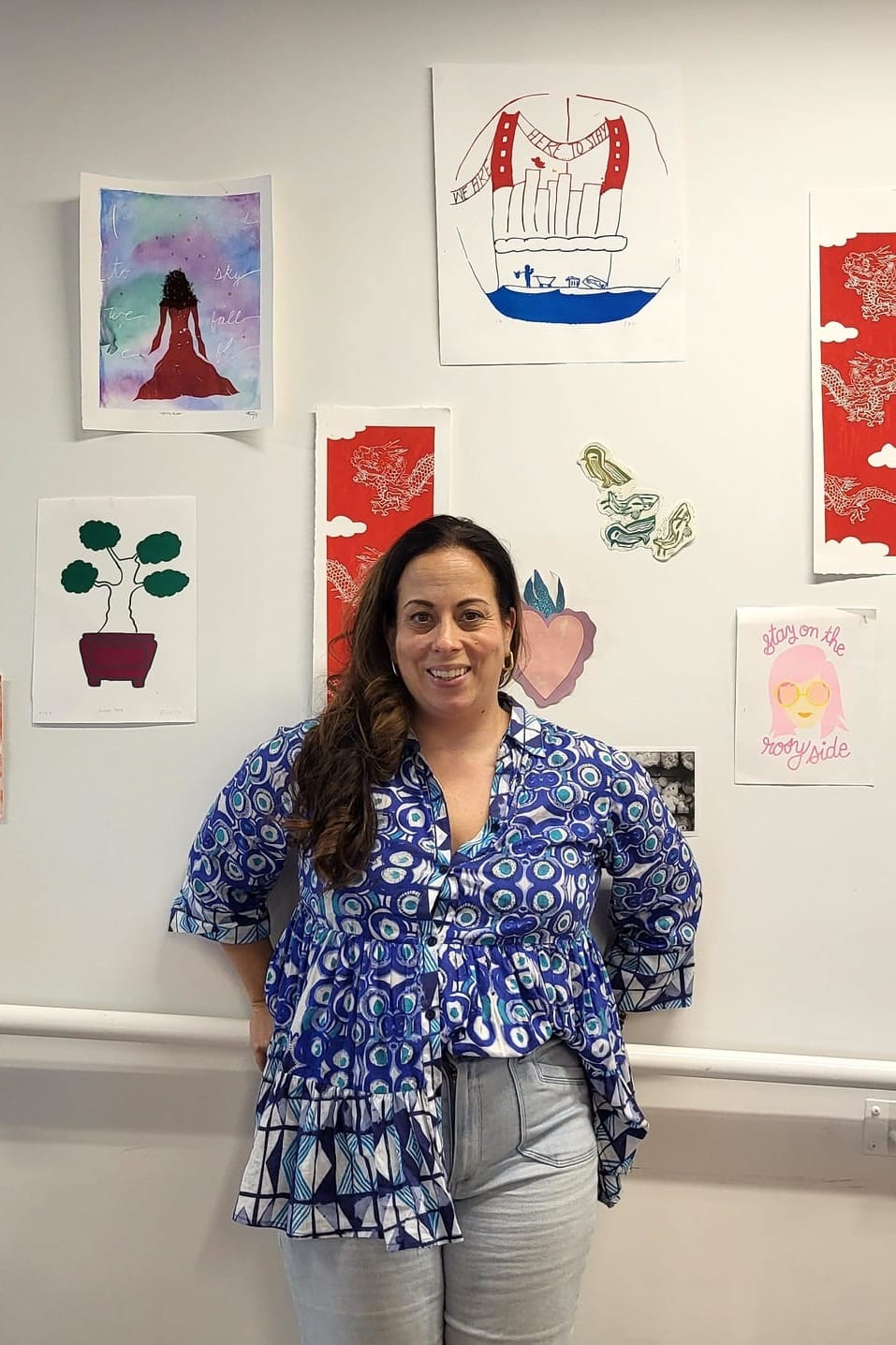
“We're keeping our core programming as the high school programming, but we're opening our doors to everyone,” Falchi-Macias said, noting struggles with city funding. “I want people to understand that the service fee supports us being able to keep our core youth programming free. We have to be creative and figure out another way to support it because we really believe that it needs to stay free.”
The Ingleside Light caught up with Falchi-Macias to learn more about what it's like to run a nonprofit.
This interview has been edited for length and clarity.
Why are art programs, like this one, important for youth development?
I think that not everybody learns in the same way. From my experience growing up, or from having immigrant parents, there was just one track: you had to go to school. You have to do well academically in the way that you're taught in school, and you don't have another option because that's the way that you can advance in society and financially.
I'm going to say that not everybody can; not everybody's mind works that way. I don't feel like our school system is set up to meet those other needs. Someone can be just as intelligent and just as smart and not do well in an academic environment, but they thrive in a music program, or they thrive in a different way and do something else. How do we know what works for the kids or what they're into or what drives them if we can't expose them to that or give them those options? Exposure is key.
Do you have a favorite memory so far?
My architecture class designed and built the first parklet here in San Francisco, and so it was like a big deal because the planning department had never had to permit a project that was designed and built by high school students. They were like, “What is this?” I was like, “Oh my God, this is going to be crazy. They're going to have all these kinds of rules that we're not going to be able to meet.” But it actually made it easier for permitting because as soon as you put youth in front of the planning folks and they’re presenting, they are like “Oh yeah. Anything goes.” That was a big moment.
What are some of the challenges YAX is facing?
The biggest challenge right now is the funding cuts to the arts. The priorities are changing. I think it trickles down from our presidency to our mayor. I think the arts are not a priority. As soon as that happens, they just start cutting programs that feel like they're excessive or not necessary. The other thing that's happening is that there are a couple of funders that are government funders or city funders that have funded the arts for decades, that are now merging all into one source, so that also will going to shrink funding. A lot of organizations are really nervous about that. There's some work that we’re trying to lead around, doing some advocacy around funding for arts, and really centering youth voice in that, because we are a youth development and arts organization, so from that angle of putting youth at the center and asking them what they want and what they need in the arts in the city, for the future. We’re starting those conversations on who should be at the table. Together, we’re going to be stronger making this case.
What is one piece of advice you have for someone who wants to get into nonprofit work?
When I first started working in a non-profit, I was very underpaid for a very long time. Don't fall in that trap. You should be paid what you deserve to get paid. There’s a lot of misconception that, like “Oh, it's a non-profit, so you just get paid less to do more,” and I got caught in that for a while and didn’t realize that until I became executive director, and I was like “Ohh, you don't have to do it this way.” That might mean we have fewer positions,s but at least I’m paying people well, and I’m paying their benefits because I think that’s key too. I didn’t have benefits either for a long time, and I just dealt with it and didn’t have insurance, and I don’t think that’s right.
You just have to start somewhere. Pick a nonprofit where you see growth opportunities. Pick one you really believe in, because that'll keep you there. When it gets hard, you'll want to come back to work on Monday.