


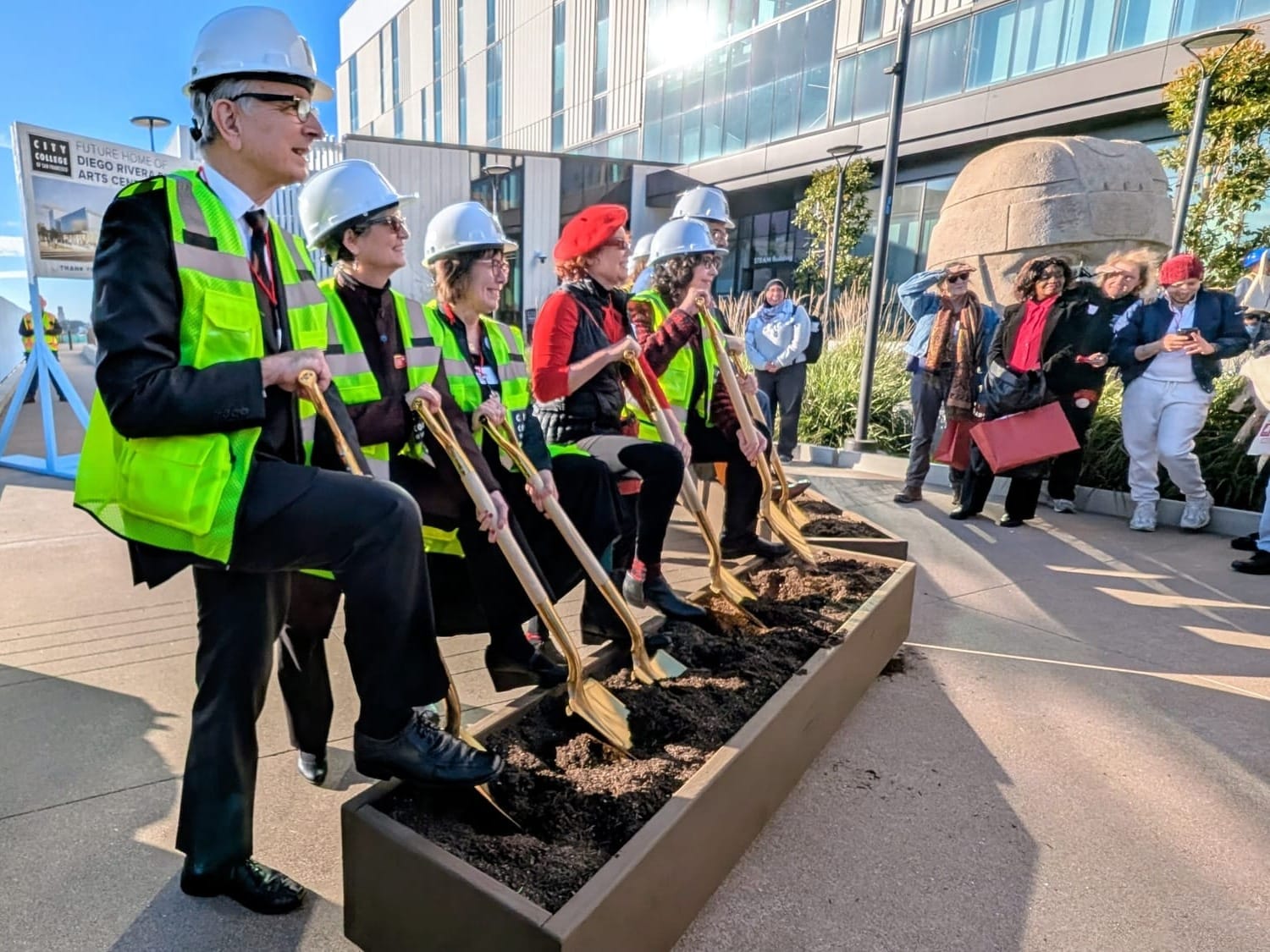
The City College of San Francisco community and special guests gathered Thursday afternoon for a groundbreaking ceremony for a decades-in-the-making facility.
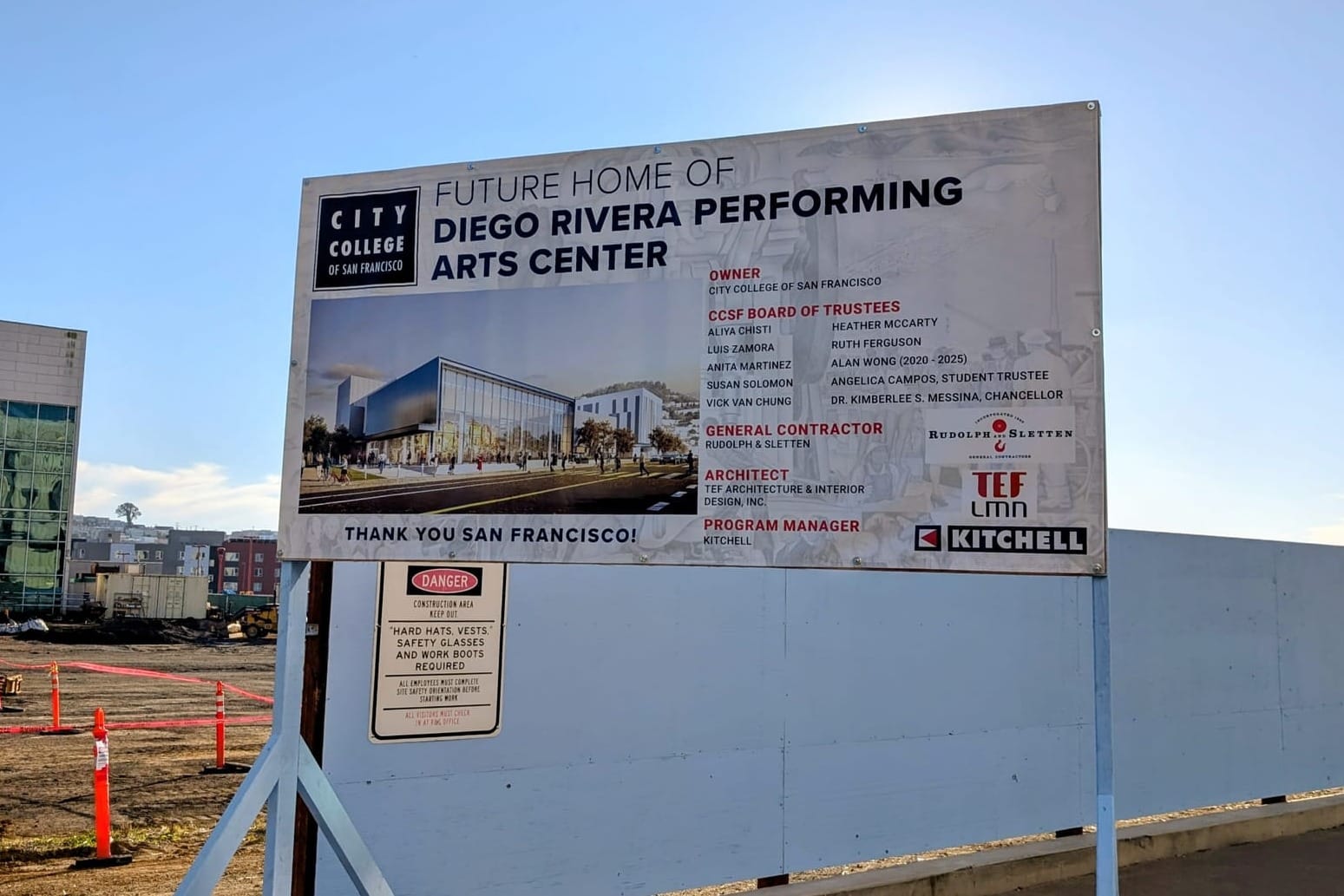
The 90-year-old college broke ground on the long-awaited Diego Rivera Performing Arts Center, which will permanently house the huge and historic Diego Rivera fresco, “Pan American Unity,” and provide state-of-the-art performance spaces for the college.
College officials, current and former faculty and San Francisco Mayor Daniel Lurie joined in the celebration of the groundbreaking for the $180 million facility which will be located between the STEAM Building and Harry Britt Building, along Frida Kahlo Way, a street named after Rivera's world-famous wife.
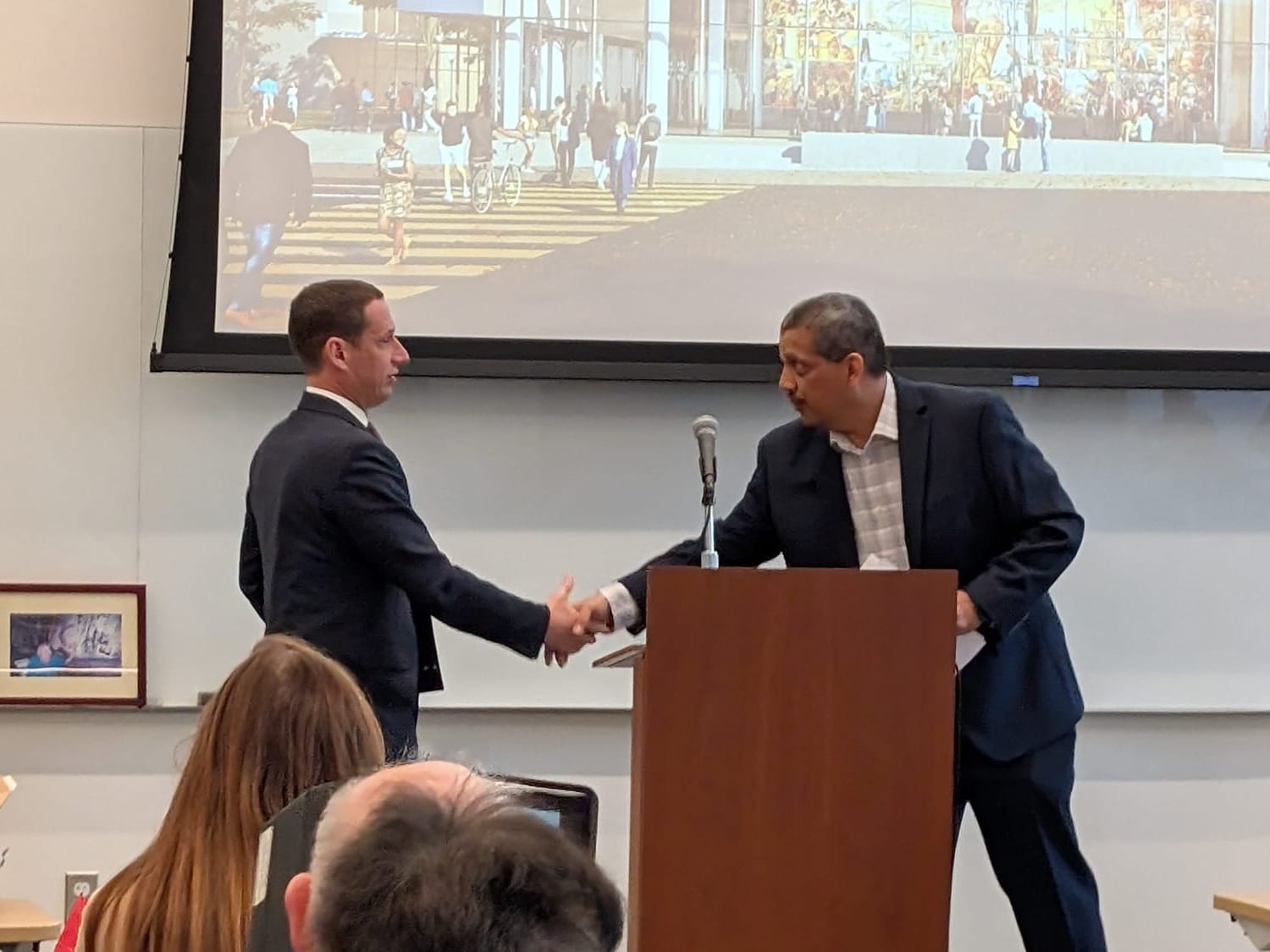
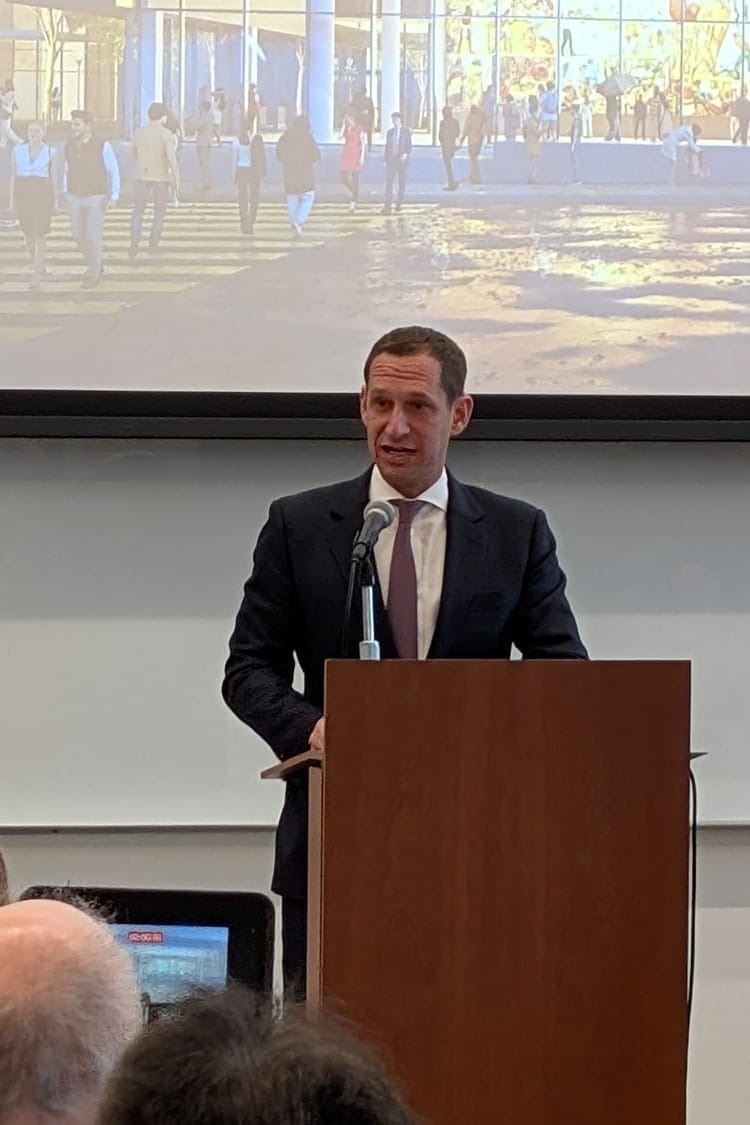
Associate Vice Chancellor of Facilities, Construction, and Planning welcomes Mayor Daniel Lurie to the podium. | Jerold Chinn/Ingleside Light
The 77,000-square-foot performing arts center will feature a 600-seat performance hall, a 150-seat studio theater, a 100-seat recital hall and flexible spaces for instruction or rehearsals. The lobby of the performing arts center will house the priceless fresco.
Just how long it took the college to get to this point was debatable among those who attended the celebration.
“As you've heard today, this project has been not 20, 40, but 60 years in the making, so I appreciate the fact that I get to be here during this momentous occasion,” Chancellor Kimberlee Messina said.
Marco Antonio Mena Rodriguez, the Consul General of Mexico in San Francisco, spoke about Rivera as one of the most influential artists of the 20th Century.
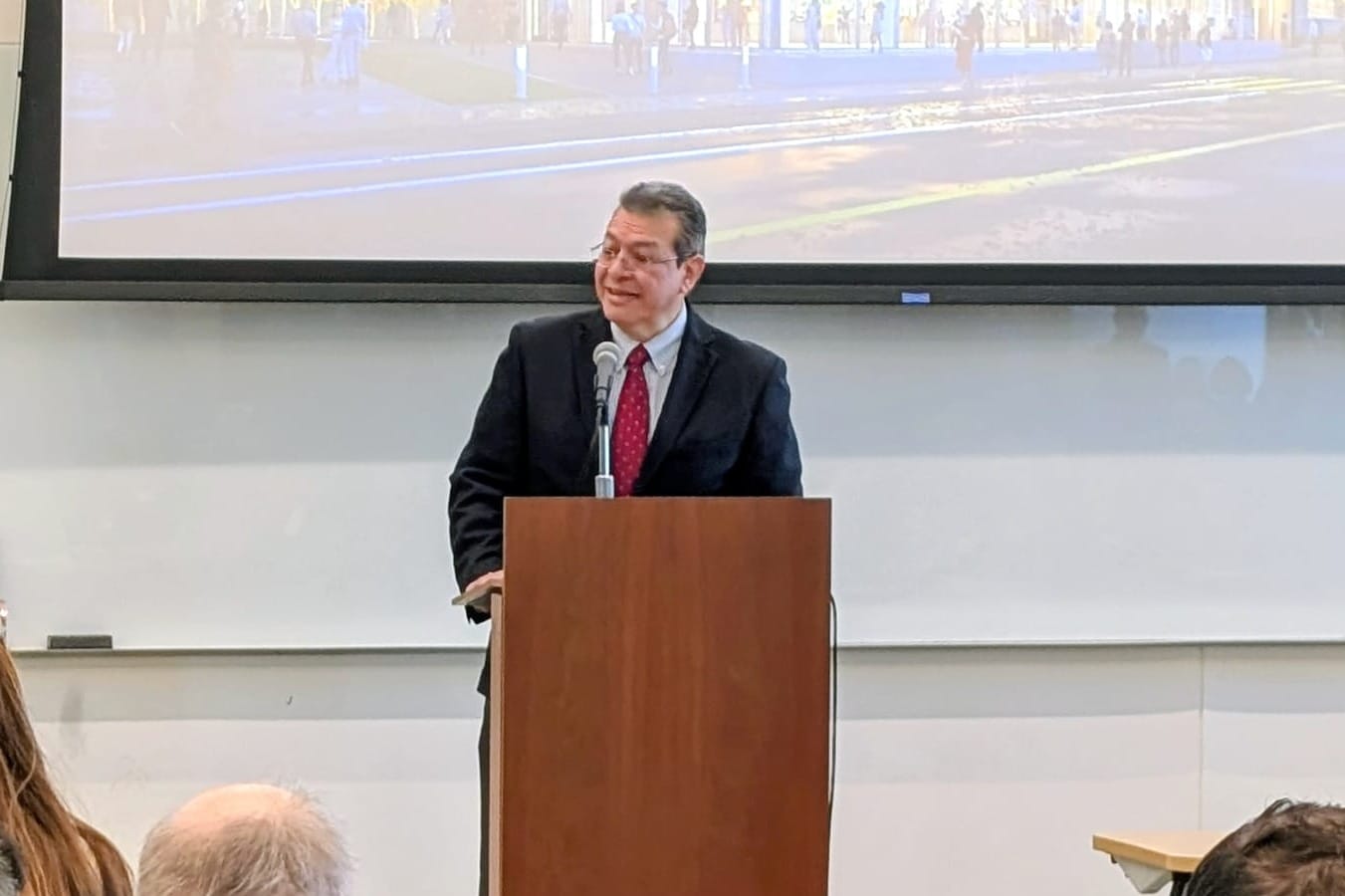
“His work also has many ties with San Francisco, where his murals continue to connect Mexico and the United States,” Rodriguez said. “Projects like this strengthen the cultural ties between Mexico and California.”
Lurie also spoke about the importance of Rivera’s fresco being publicly displayed in the performing arts center.
“The scale of that work reflects something larger than the art alone, and speaks to a belief shared by many San Franciscans that creativity belongs in public life and that artists are shaped by their community,” Lurie said.
While campaigning for mayor last year, Lurie told The Light that he would work with the college, the tourism industry and surrounding small businesses to integrate the performing arts center into cultural tours for the enhancement of the neighborhood economy.
"Additionally, I'll work to improve transit access and community programming around the theater, ensuring that Ingleside becomes a vibrant cultural destination that showcases our rich artistic heritage and contributes to the city’s economic growth," Lurie said.
Created in the public’s view during the 1939 Golden Gate International Exposition, Rivera’s “Pan American Unity” masterwork was meant to grace the college's yet-to-be-built library, but went into storage instead. It went on display again in 1961 in the college’s too-small theater lobby. Following decades of being displayed at the college, the mural went on display at the San Francisco Museum of Modern Art through early 2024. The mural is currently in storage.
Music and Theater Department Chair Madeline Mueller, who began teaching at City College in 1965, said she has been advocating for a performing arts center for decades. Mueller called the college “incomplete” without an arts center and for being unable to fit Rivera’s entire 66,000-pound mural.
“The mural site in the college's Little Theater was a busy venue for hundreds of events, many featuring themes from the mural,” Mueller said. “However, the college has had no auditorium to fit the size and the needs of thousands of performing arts students and their enthusiastic audiences.”
Mueller encouraged the public to research and write about the strenuous effort required to get the performing arts center to its groundbreaking.
Construction of the performing arts center will last through the fall of 2028.


