

About two dozen people filled Ingleside Branch Library’s community room on a mid-October Saturday for Ocean View-Merced Heights-Ingleside History Day, an event organized by the San Francisco Planning Department.
“I’m so glad I came to this, because I definitely didn’t know stuff that was happening [in the OMI] before 1957,” said longtime resident and Ocean-Ingleside Lions Club president Charlene Henderson.
The Planning Department’s Cultural Heritage program hosted the event in partnership with the San Francisco Public Library, OMI Cultural Participation Project, San Francisco African American Historical and Cultural Project, the Western Neighborhoods Project and the Ocean Avenue Association. Planners shared their research on the neighborhood’s past and asked residents to share their stories and identify what they feel is worth preserving.
Among the presenters was Maggie Smith, a senior planner tasked with completing the Ocean Avenue Neighborhood Commercial Historic District.
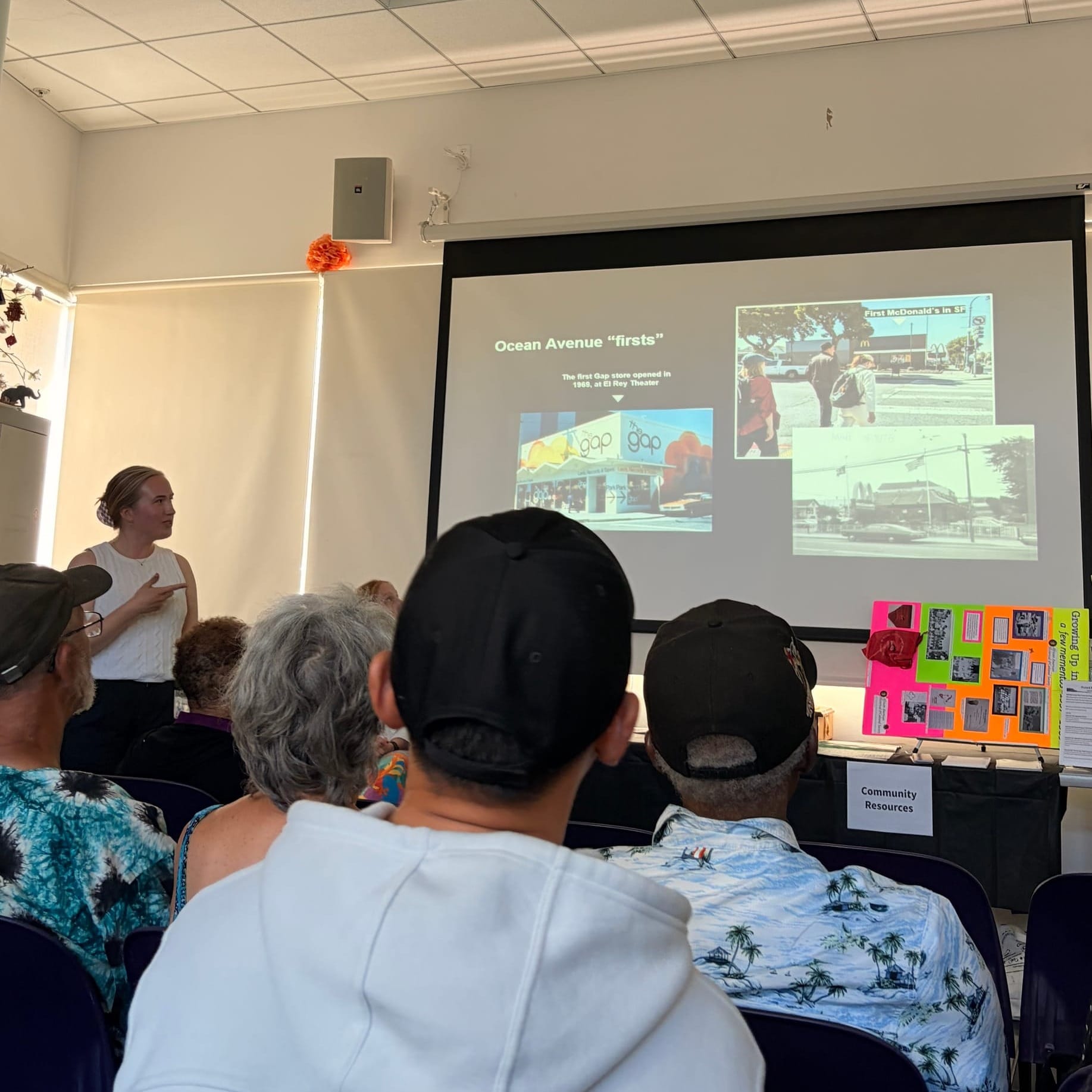
“We want to hear from you which places we should make sure to usher into future generations,” Smith told the participants.
The Cultural Heritage program has three main components: SF Histories collects and records the city’s past through written research documents; SF Survey identifies historically and culturally significant locations; and SF Places uses tools like landmark designation to formally recognize those locations.
Landmarks on Ocean Avenue include the El Rey Theater and the Ingleside Presbyterian Church, site of the “Great Cloud of Witnesses” collage mural that honors Black history.
Smith said planners have also recommended Java on Ocean’s building for landmark designation.
The program opened with a video from Western Neighborhoods Project billed as a “very short and absolutely not comprehensive” history of the OMI, from its old roadhouses and saloons to the racetrack that became a refugee camp after the 1906 earthquake.
Assistant Planner Elina Juvonen then walked the audience through some Ocean Avenue highlights. The corridor was home to the Gap’s original location and the city's first McDonald’s.
She also shared information about the African American-owned businesses that once populated the avenue. In 1950, African Americans made up about 5% of the OMI’s population; by 1970, they were 62%. On a table at the front of the room, the planners had put together a list of more than 30 African American-owned businesses that operated in the area from the early 1960s through the 1980s, along with a map on the wall showing where they were located.
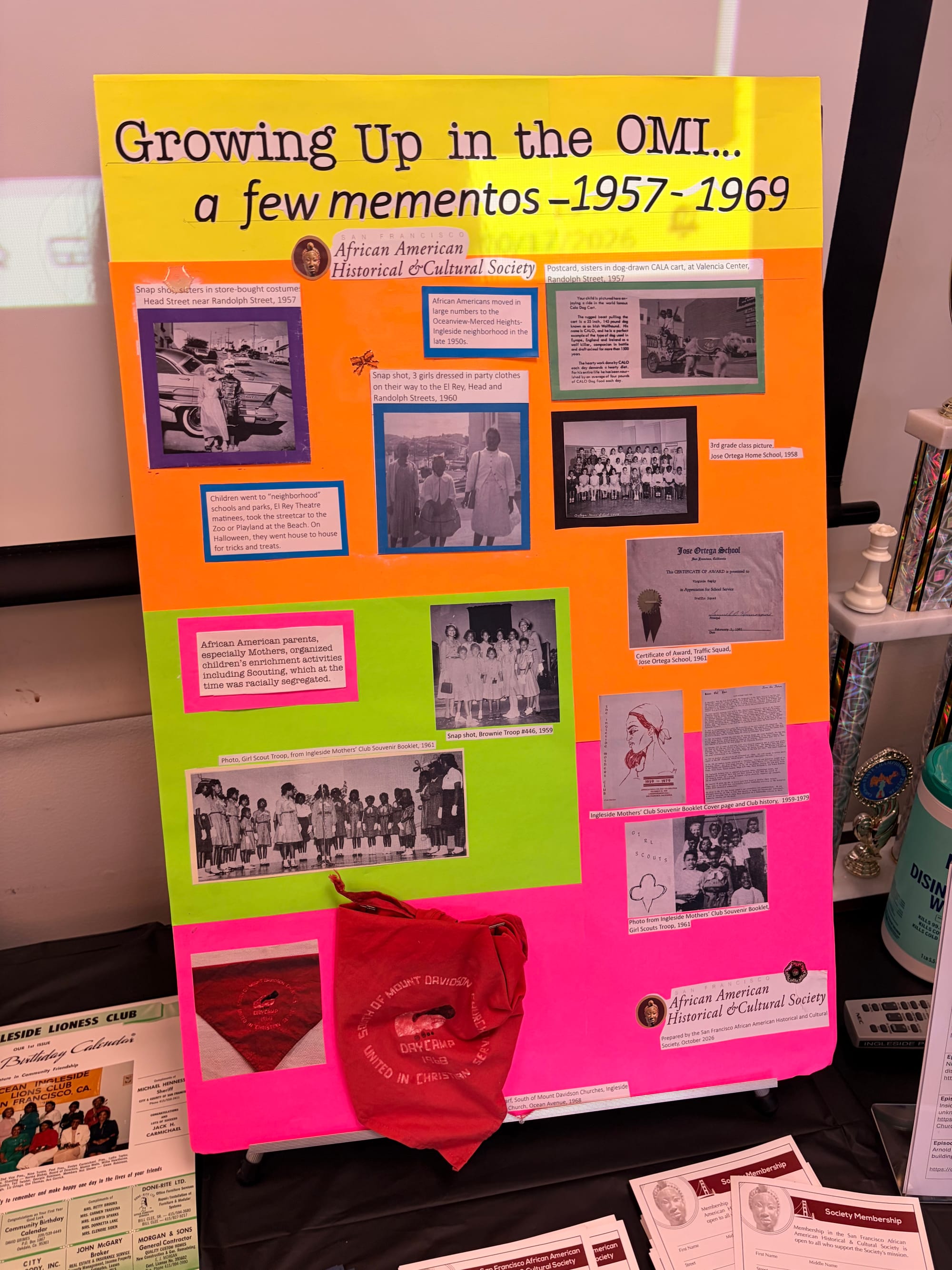
“We know that there were a lot of people who had businesses along Ocean Avenue, and we have some active research,” Juvonen said. “If you have something to contribute, we really welcome that, because we know that there are gaps in our research.”
Earlier this year, Planning Director Richard Sucré told The Ingleside Light that the need for this very research was delaying the Ocean Avenue Neighborhood Commercial Historic District. Planners did not update the district's status at the event, but later said they expect to bring their findings to the Historic Preservation Commission early next year.
Drew Howard, of the San Francisco African American Historical and Cultural Society, shared memories of growing up in the OMI.
“My parents bought a house on Kenwood in 1956, and we are fortunate to be back in it now,” he said.
Howard learned how to skate at Legg’s Ice Skating Arena, and his school crossing-guard card got him into movies at the El Rey on Saturdays. He remembered buying car parts from Savoy Auto, one of the African American-owned businesses on the planners’ list, which stayed open until midnight. Audience members nodded in recognition.
Residents with stories of their own to share can fill out SF Survey’s Community Stories Form or send an email to cpc.survey@sfgov.org. A history pillar with information from the event will be on display at the Ingleside branch through November.
“We’ve learned so much just talking to community members here, and I think it’s really important to uplift that history. It’s such a diverse part of the city,” Juvonen said.


