


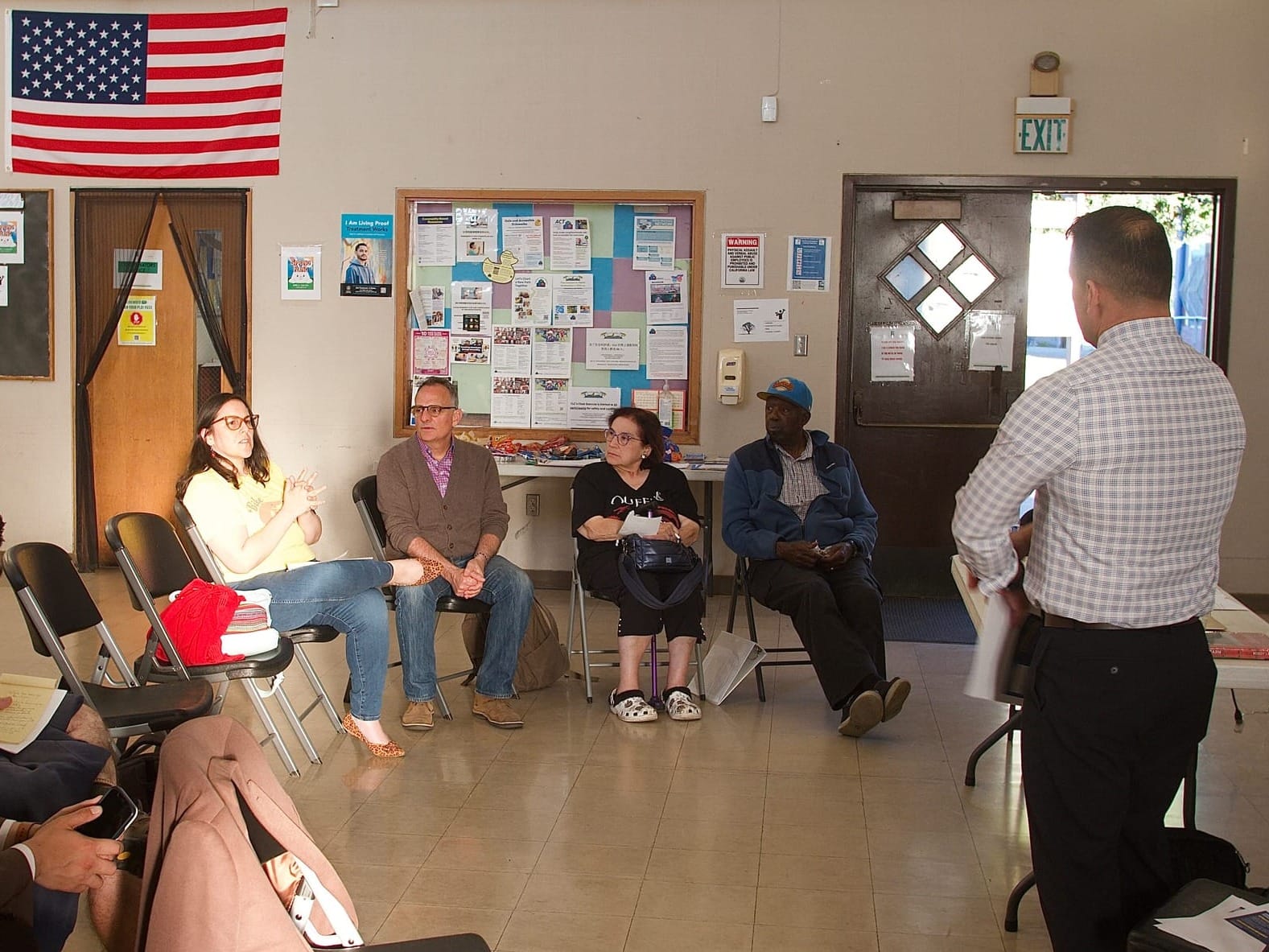
Jorge Rivas, head of the San Francisco Office of Civic Engagement and Immigrant Affairs, spoke at the Excelsior District Improvement Association’s Tuesday meeting about a range of resources, from the rapid response hotline to citizenship workshops.
The presentation was particularly timely, given the arrests made by plainclothes immigration officers at San Francisco International Airport over the weekend. Rivas revealed the office’s greatest challenge: keeping up with the times.
“It’s about meeting the moment that we're in and making sure that we're pivoting to address what comes our way,” Rivas, who’s the son of Mexican immigrants, said to the seven attendees in the Crocker Amazon Clubhouse. “I feel like every week we need to do something new.”
Rivas said that, in fact, earlier that day, the office released resources on knowing your rights at airports in response to the Immigration and Customs Enforcement presence at SFO.
There with Deputy Director of Civic Engagement and Immigrant Affairs Aaron Yen, Rivas said that he wanted to make a personal appearance for the presentation due to his prior relationship with the EDIA while working for the Office of Economic and Workforce Development.
“I know him because we were both at City Hall,” said Mel Flores, president of the EDIA. “In talking to him, it became clear he was doing something different that might be of interest to the community.”
Rivas described much of the office’s work as being rooted in supporting newcomers and immigrant communities. That includes helping develop worker cooperatives and other income-generating opportunities so residents can support themselves while navigating the immigration process.
The office also manages a grant program that invests in community-based organizations across San Francisco. Funding is largely directed toward two areas: language access and affirmative services. Through language access grants, local groups provide education and training to help residents better understand their rights. Funding for affirmative services supports individuals to apply for citizenship, secure work permits and move forward in their immigration cases. Additional grants support day laborers and domestic workers.
Joanna Artega La Spina, the branch manager of the San Francisco Public Library's Excelsior Branch, attended the meeting to continue seeking opportunities to provide her patrons with up-to-date resources.
Artega La Spina, 47, raised her children in the Excelsior.
“Right after the election, I saw a dip in immigrants coming into the library. So we've worked very hard in making sure that people feel safe there,” she said.
When asked if she felt the Excelsior neighborhood is a safe place for immigrants, she said, “It depends on the block.”
“Overall, Excelsior has always been an immigrant neighborhood. And so, there's still a lot of strong advocates for immigrants in the area.”
Charlie Sciammas, a legislative aide for District 11 Supervisor Chyanne Chen, who was also in attendance, agreed, describing the Excelsior as a multi-ethnic and multi-lingual community.
“If you actually look at different parts of the city, this is probably the district that has the most diversity just in terms of really strong representation of many different immigrant communities,” Sciammas said.
Rivas continued to describe the bulk of his department's work as keeping a finger on the pulse of drastic changes in federal policies and sharing available resources.
He stressed that the SF Rapid Response Hotline isn’t an alert system; it’s a way to connect people to legal help and immediate support when ICE activity is reported in the community.
The citizen workshops help people complete their applications with support from an attorney to continue on their path towards citizenship.
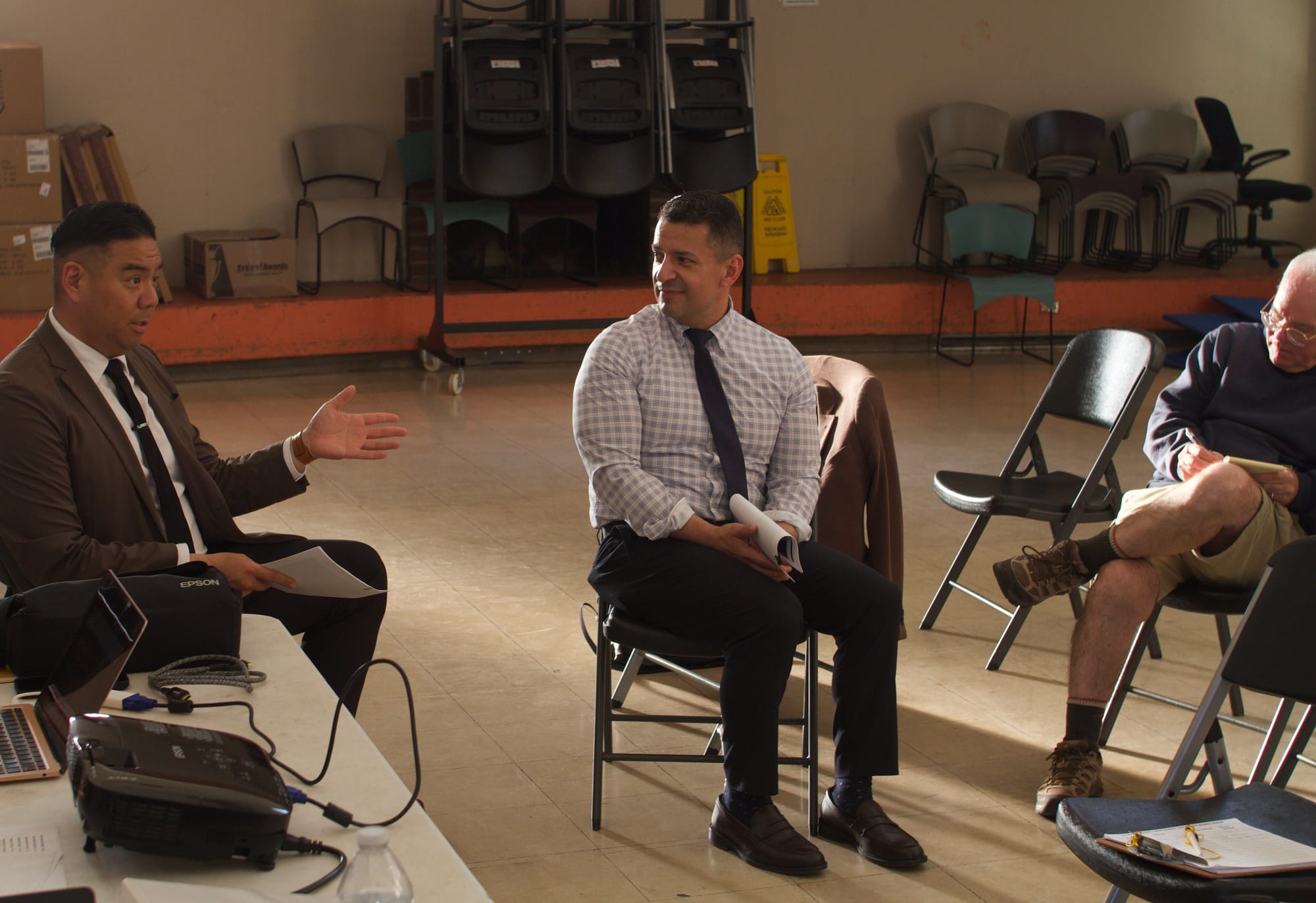
“If there’s one resource to remember, it’s the SF Immigrant Forum,” Rivas said. “We have partnered very closely with the Department of Public Health, the Mayor's Office of Housing and Community Development, and the Human Services Agency to put this site together. It's basically a list of city and community resources that are available regardless of status.”
While ICE has always had a presence in San Francisco, Rivas said, it’s now more visible and more aggressive in its enforcement, creating a culture of fear that changes how San Franciscans move through their daily lives.
“Last year, for example, we saw a dip in the number of folks that were signing up for soccer games through the San Francisco Recreation and Parks Department,” he said. “Even rumors of enforcement can spread quickly and deepen that sense of anxiety in the community.”
Sciammas said that the city has built a strong foundation for providing immigration support with community organizations since the early aughts.
“The discussion that happened today really showed how there's still so much fear and anxiety in the community, and the rules are shifting,” Sciammas said. “Every day reality is shifting, and people need to be able to kind of keep up with where the enforcement is happening, which all requires pivoting to a proactive approach.”
For more information on the city's immigration resources, go to sf.gov/immigrants.


