

A campaign to stop a project that would install more artificial turf ball fields at San Francisco’s Crocker Amazon Playground entered enemy territory on Saturday.
Fifteen members of the grassroots group Keep Crocker Real gathered outside the San Francisco Giants’ Oracle Park during FanFest to protest the ball club’s bankrolling the Recreation and Park Department’s proposal to rebuild the baseball and softball fields.
“They’ve never spent the money they’re about to spend to do anything about repairing this park,” said Tracy Swedlow, a Crocker Amazon resident who uses the park daily, standing in a sea of Giants fans lining up in Lefty O’Doul Plaza to enter the stadium.
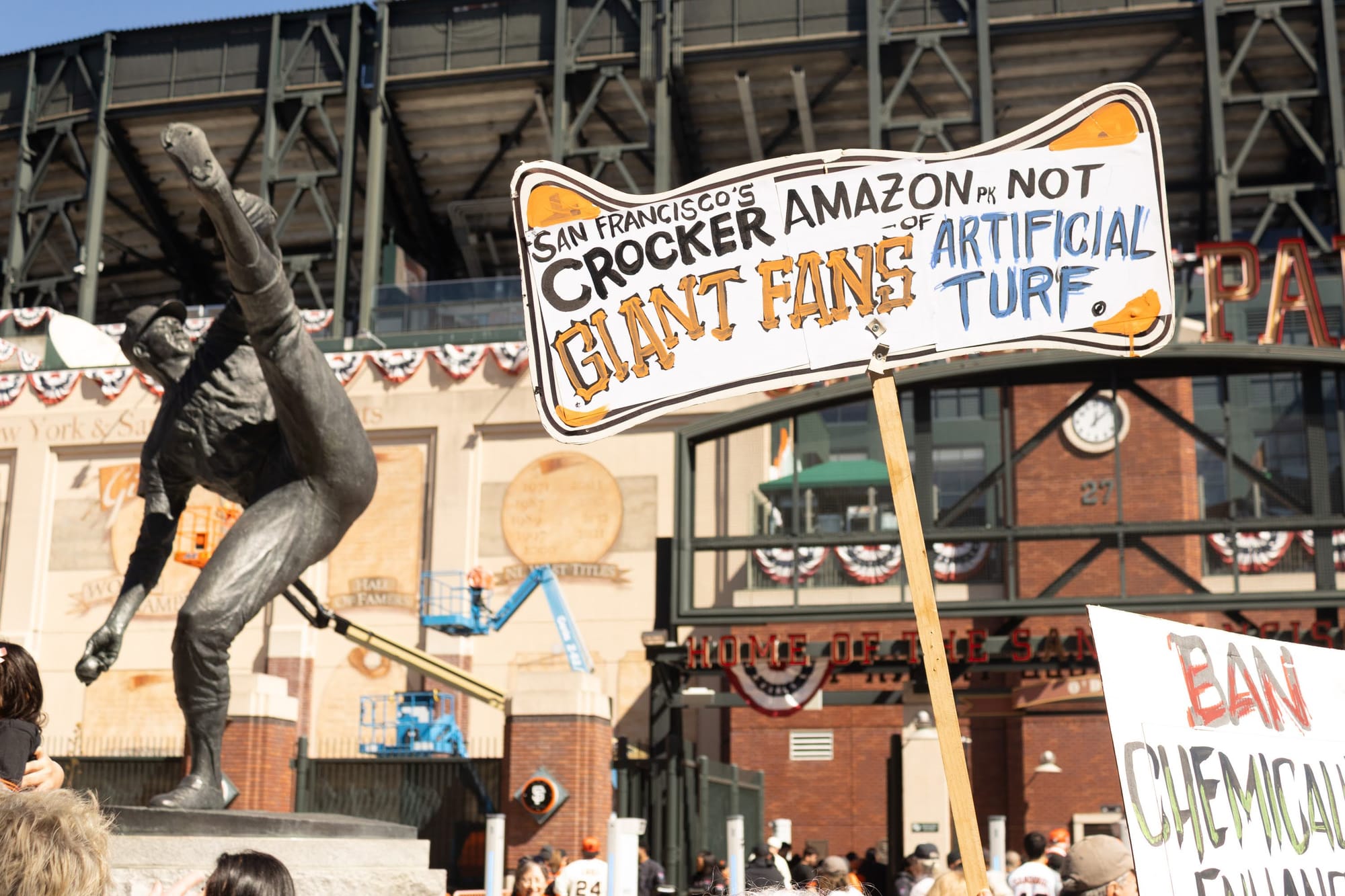
As Swedlow spoke with Giants fans about the project, one man grimaced and told her to “stop being such a Debbie Downer.”
“The Giants don’t like to play on astroturf; they play on grass,” she said, adding that the project will turn the park into a sports complex, disenfranchising other parkgoers from using it.
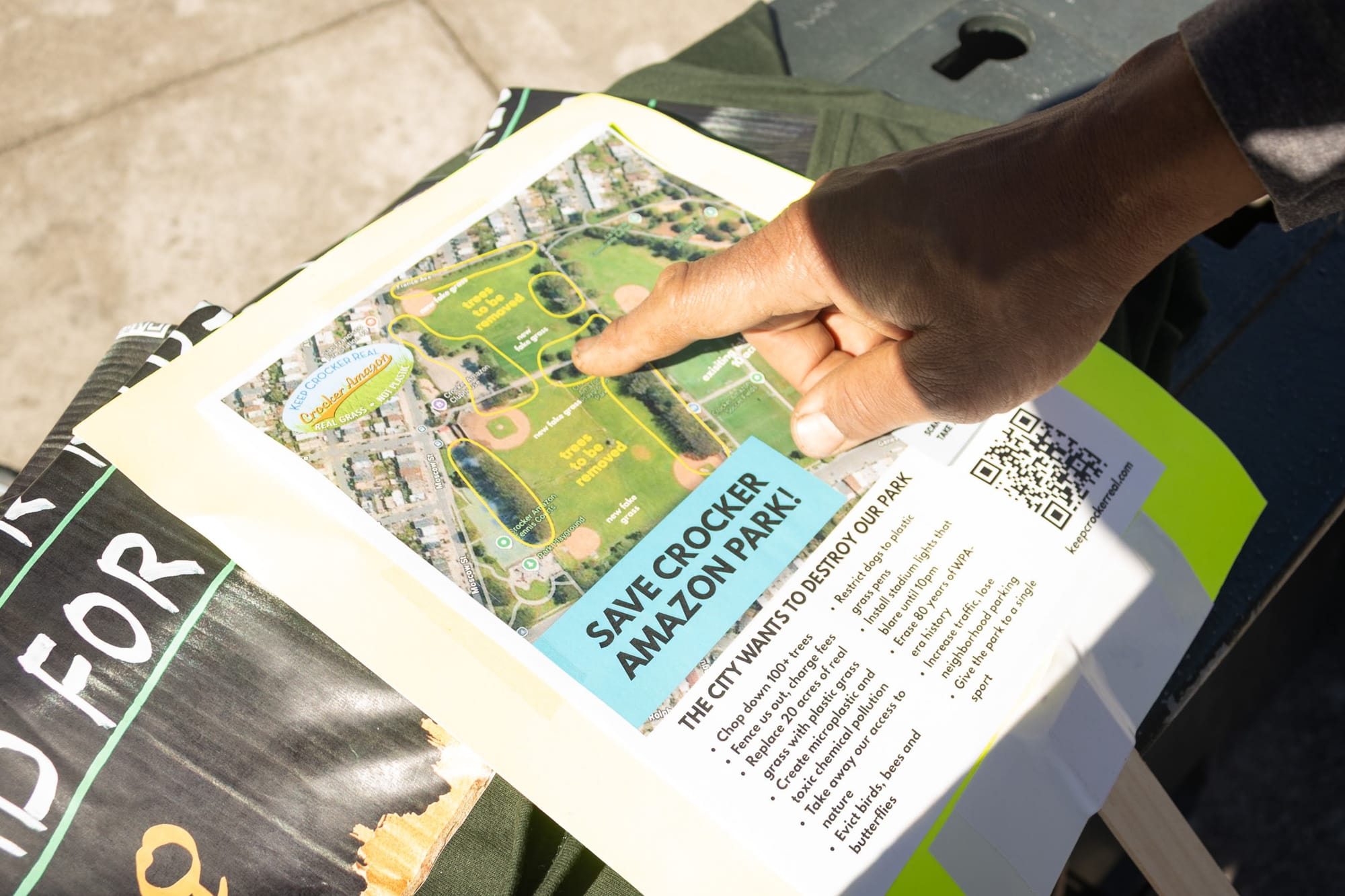
The $45 million project, paid for 50-50 by the Giants, has drawn concerns over microplastic pollution, carcinogenic rainwater runoff, privatization and the way city government does public outreach. Yet turf proponents counter that the environmental impacts are insignificant as the turf is made from tested plastic and natural cork and sand infill, and a small price to pay for the increased play time on fields that need little maintenance.
Representatives of the Giants Community Fund did not respond to a press query.
To date, the department has $546,000 allocated to the project, $500,000 in bond funds and $46,000 in general funds. About $475,000 has been spent, with $23,000 due to existing contracts.
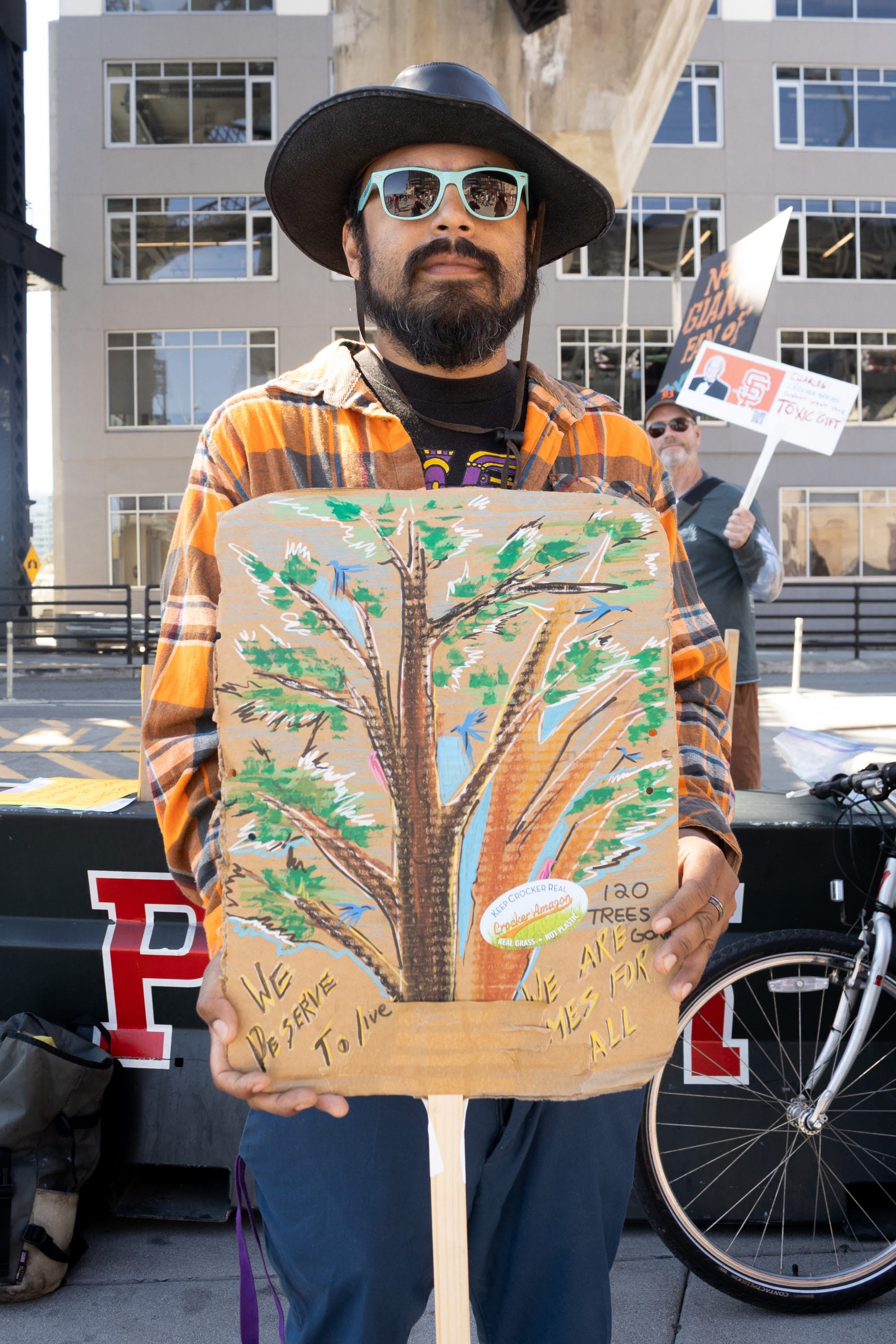
South Beach residents Katie and Farron McDonald, dressed in Giants gear, were persuaded by Keep Crocker Real members about artificial turf’s downsides.
“I know turf causes injuries, I know it isn’t the safest surface to play on, and I think it takes away from the natural beauty of any park it gets put into,” Farron said. “I’m not the biggest fan of turf in general, anywhere, be it for professional sports or for kids. It's not the safest place.”
Katie added that she has concerns about the environmental impact.
“In order for them to put it all in, they have to take out what already exists there, like natural trees, grass and an already existing ecosystem,” Katie said. “That makes me upset because you can’t help but think about what other kind of impacts that could have.”
But not all FanFest attendees saw things that way.
Cameron Lennon, a five-year South of Market resident and former athlete, said he thought artificial turf could be beneficial for youth engagement.
“Are they worried about the temperature or somewhere where the kids can actually go somewhere to have fun, play baseball and have a good time outside?” Lennon said, adding that he preferred turf to grass in his athletic days. “I work in mental health here in the city. Is it gonna do something good for the community and give something for the kids? I think that’s the most important thing to consider.”
All three superfans were unfamiliar with Crocker Amazon Playground and the proposal.
Wesley Saunders, a founder of Keep Crocker Real, has serious reservations about the project. To him, it’s environmental injustice. He said his group’s research found 11 out of 12 artificial turf fields are in low-income areas burdened by higher pollution rates. Artificial turf sheds microplastics into the air and water, a fact the California Department of Toxic Substances Control is currently working to mitigate.
Saunders also takes umbrage with Rec and Park’s community outreach, which started in earnest about four years after the project was initiated, he said.
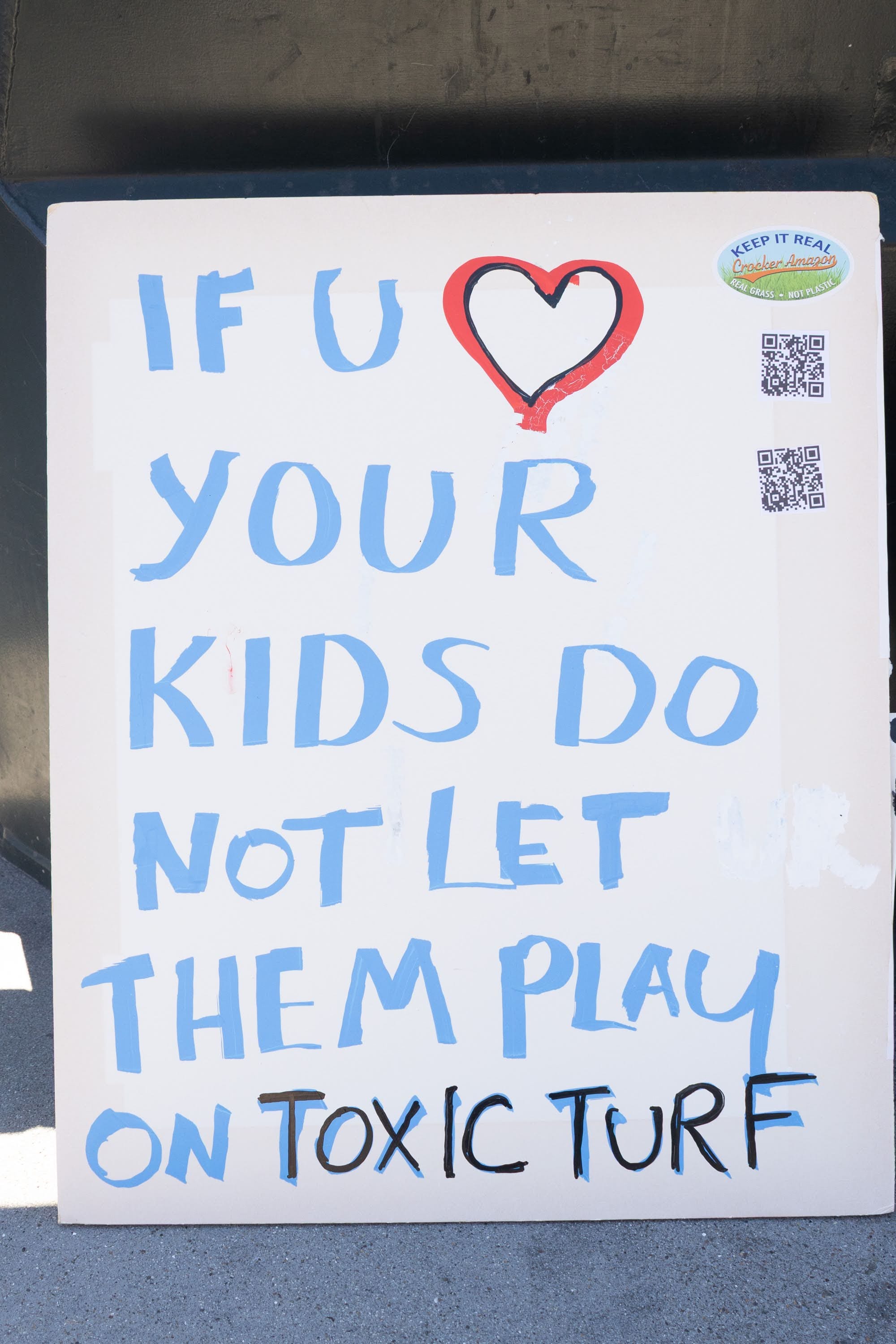
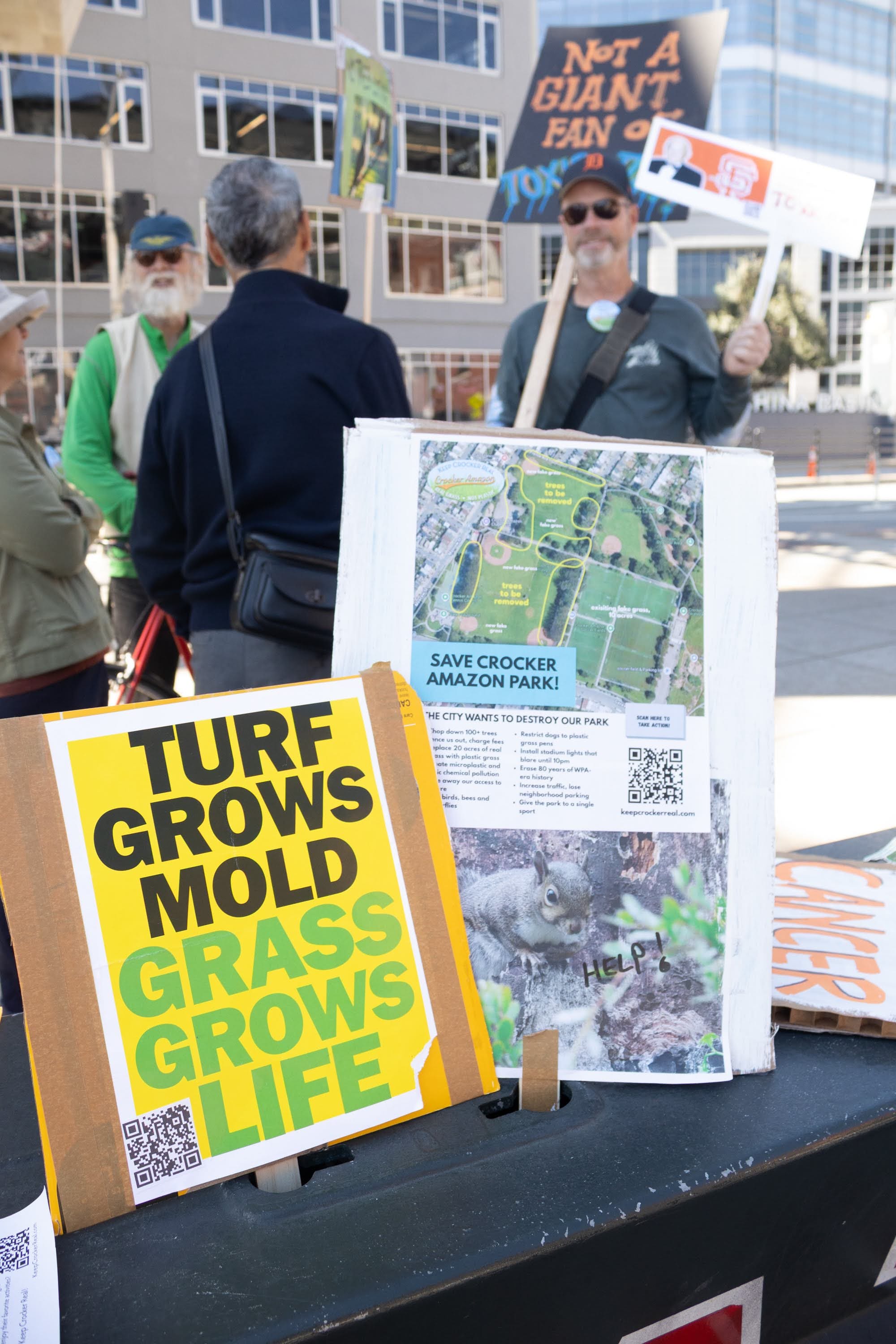
Sign-toting members from Keep Crocker Real gathered outside Oracle Park in Lefty O’Doul Plaza at FanFest on Saturday. | Kyra Young/Ingleside Light
“You have this city of San Francisco and the Giants against a small community and they’re not being fair,” Saunders said. “We only had two community meetings, and if you talk to people in the neighborhood around Crocker Amazon Park and tell them about the plan, most people don’t know and when people do find out, I’m gonna say, nobody wants it.”
Rec and Park spokesperson Tamara Barak Aparton said projects typically go through years of planning before being introduced to the public.
“During that time, we study site conditions and needs, conduct soil testing, review the park’s history and landscape, and do early design work to understand the scope, cost, and whether we have the funding to move forward," she said. "By early 2025, we had enough information to share a clearer proposal with the community and begin public meetings and Commission hearings. Public feedback has already helped shape the proposal."
On Monday, District 11 Supervisor Chyanne Chen announced Mayor Daniel Lurie, the Giants and Rec and Park would hold another public forum on the transformative project to “address the community’s concerns and integrate the community’s input.”
“This includes uplifting environmental justice, preserving natural areas, mitigating impacts to nearby residents, and addressing the needs of youth, family, and elder park users who do not participate in organized athletics,” Chen said in a statement.
Update: The article has been updated to include a statement from the Recreation and Parks Department and to clarify that turf is made from plastic.


