

This story is free to read because readers choose to support The Ingleside Light. If you find value in independent local reporting, sign up for a subscription to power our newsroom today.
For anyone curious about the controversial redevelopment of Crocker Amazon Playground’s baseball stadium and surrounding open space into a complex of baseball fields decked out with artificial turf, a Google search shows the main baseball diamond is curiously named “Pieretti Field.”
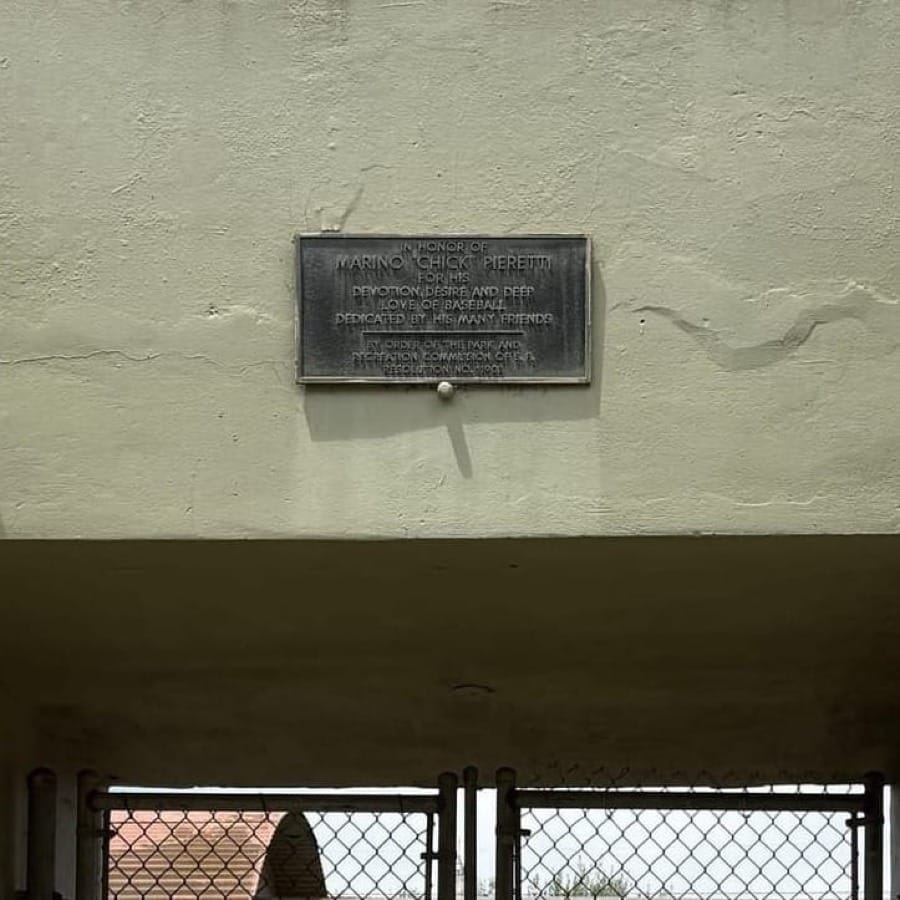
While no Rec and Park-green sign indicates that the field has that name, eagle-eyed observers will notice a plaque over the grandstand and one panel of the baseball stadium’s mural features the “tiny but mighty” right-hander Marino "Chick" Pieretti.
Pieretti pitched six years in the majors with the Washington Senators, Chicago White Sox and Cleveland Indians. He had a distinguished career as a right-handed pitcher in the Pacific Coast League with a 115-103 win-loss record over seven seasons. When his career ended, he trained newcomers in America’s pastime for decades.
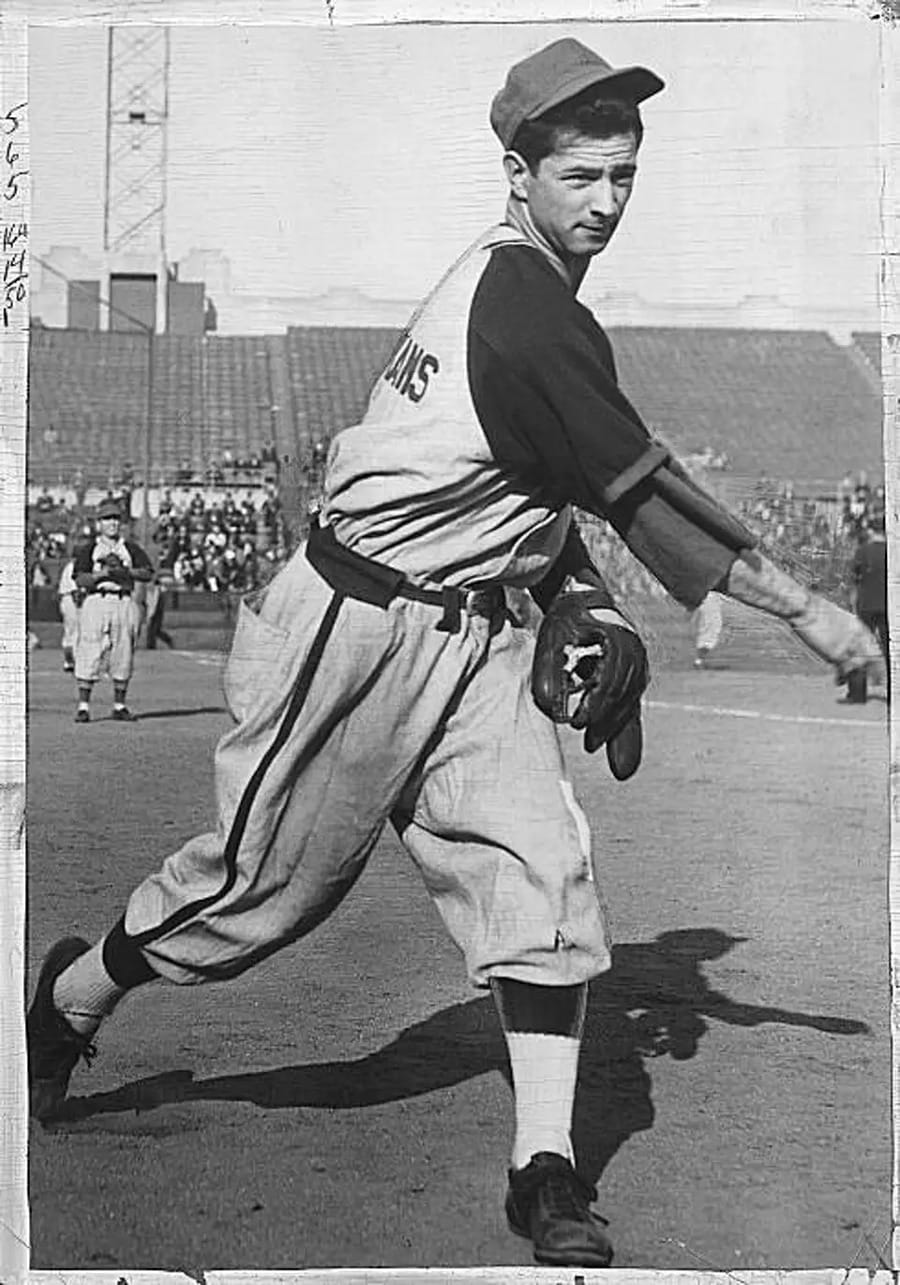
“If you could combine DiMaggio’s ability and Pieretti’s personality and character, you’d have the Champion of the World,” former University of San Francisco baseball coach Dante Benedetti once said. “If I had to pick a Mr. Baseball, it would be Marino Pieretti.”
In 1980, a bronze plaque was installed over the grandstand entrance by the San Francisco Recreation and Parks Department to honor Pieretti, as it states, "for his devotion, desire and deep love of baseball."
While Rec and Park and the San Francisco Giants Foundation plan a big $50 million renovation involving the removal of trees and the New Deal-era baseball stadium for several artificial turf fields in a complex named after the all-time great Willie Mays Fields of Champions, now’s a good time to remember Pieretti.
They Don’t Make ‘Em Like That Anymore
Pieretti was born in Lucca, Italy, in 1920, but grew up in North Beach, where he played baseball with other great Italian-Americans.
“We’d go out and play from nine o’clock in the morning to six o’clock at night,” former pro-baseball player Dino Restelli told a news reporter. “We played three or four games. And Marino played every game. He pitched in one, played third base in another, and shortstop in the next game. He never got tired of playing.”
Pieretti didn’t make it onto Galileo High School’s baseball team. (Notably, the school was still awarding the Marino Pieretti Memorial Trophy during hall of fame ceremonies well into the 2000s.)
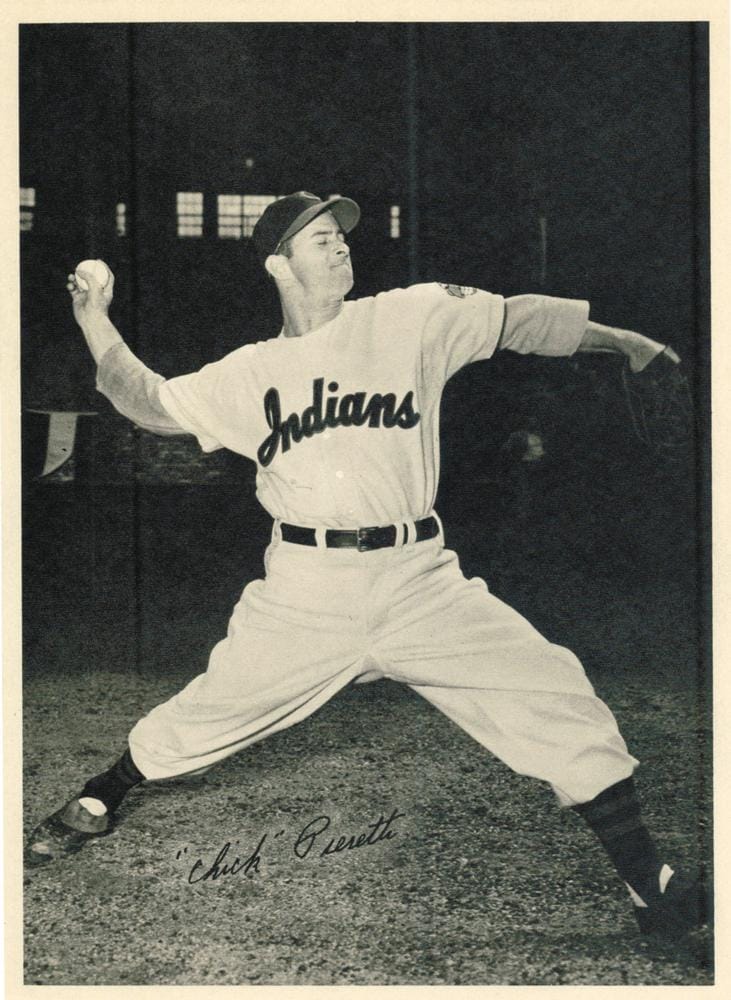
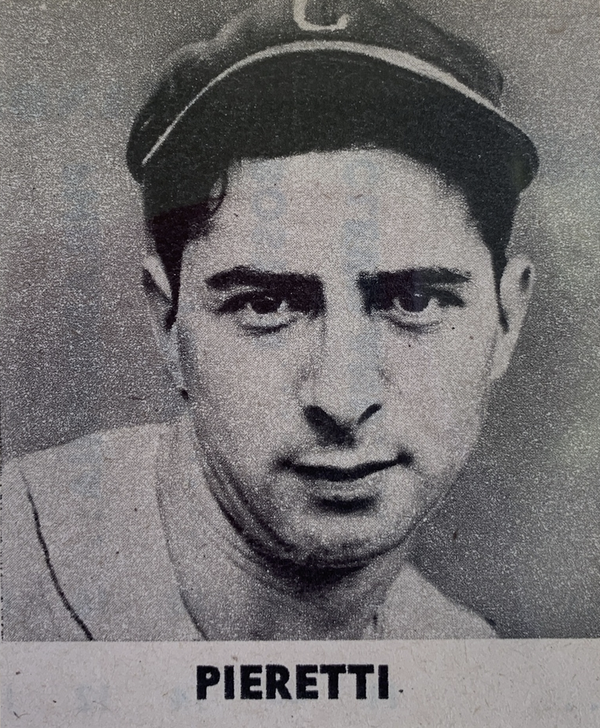
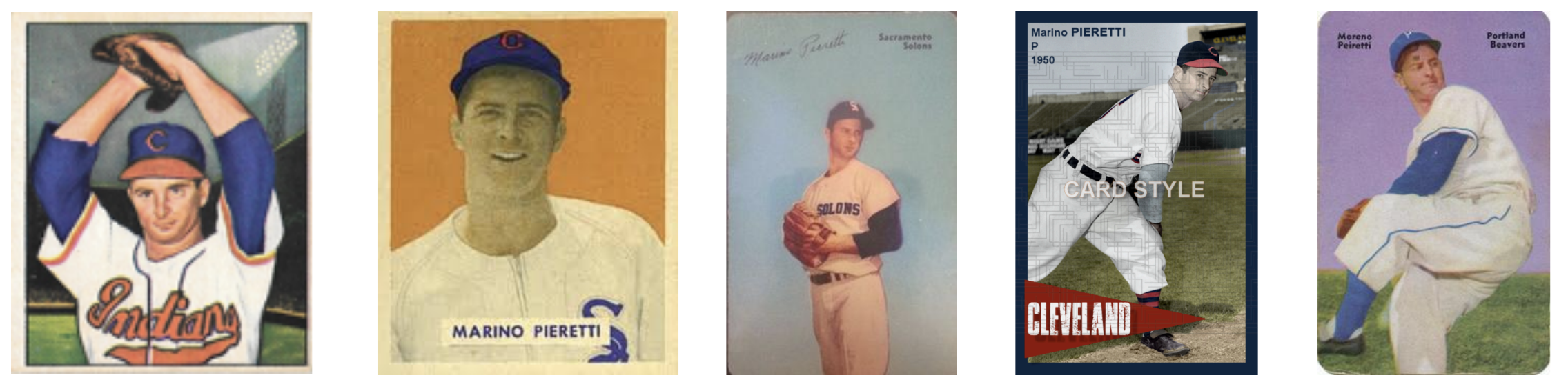
Pieretti, in 1950, while with the Cleveland Indians and Pieretti, in 1949, while with the Chicago White Sox.
Pieretti lived during a time when a semi-pro baseball player made $12,000 a season, approximately $230,000 today. Unless, however, you were DiMaggio, who was making approximately $43,000 before the war. At one point, the Washington Senators drafted him from Portland’s minor league team for $7,500. Portland later regretted letting go of him for less than the $50,000 he was worth.
Pieretti suffered a severe concussion in El Paso and developed terrible headaches, keeping him out of World War II. When the big league teams were back to full strength after the war, he was sent back to the minors. His professional career was over by 1958.
"I’ll play for nothing because you’ve got a bunch of guys who like to play ball." —Marino Pieretti
That’s when he started playing for Dante Benedetti’s New Pisa restaurant team.
“I’ll play for nothing because you’ve got a bunch of guys who like to play ball,” Pieretti said. He began pitching and managing Benedetti’s team.
Pieretti would ride the bus from his home on Chicago Way in the Crocker Amazon all across town to Cow Hollow to play ball.
Described variously in the sports pages of the local newspapers as a “prodigious half-pint” and “vest-pocket pitcher,” Pieretti was officially listed as a five-foot-seven-inch, 153-pounder.
“Forget about five-seven; he was only five-foot-five,” said Charles Silvera, a catcher who grew up with Pieretti. “And he weighed closer to 140 pounds.”
“From the waist up, he was built like a man over six feet tall,” said Dino Restelli, a former teammate and lifelong friend. “He had a big chest and big sinewy arms.”
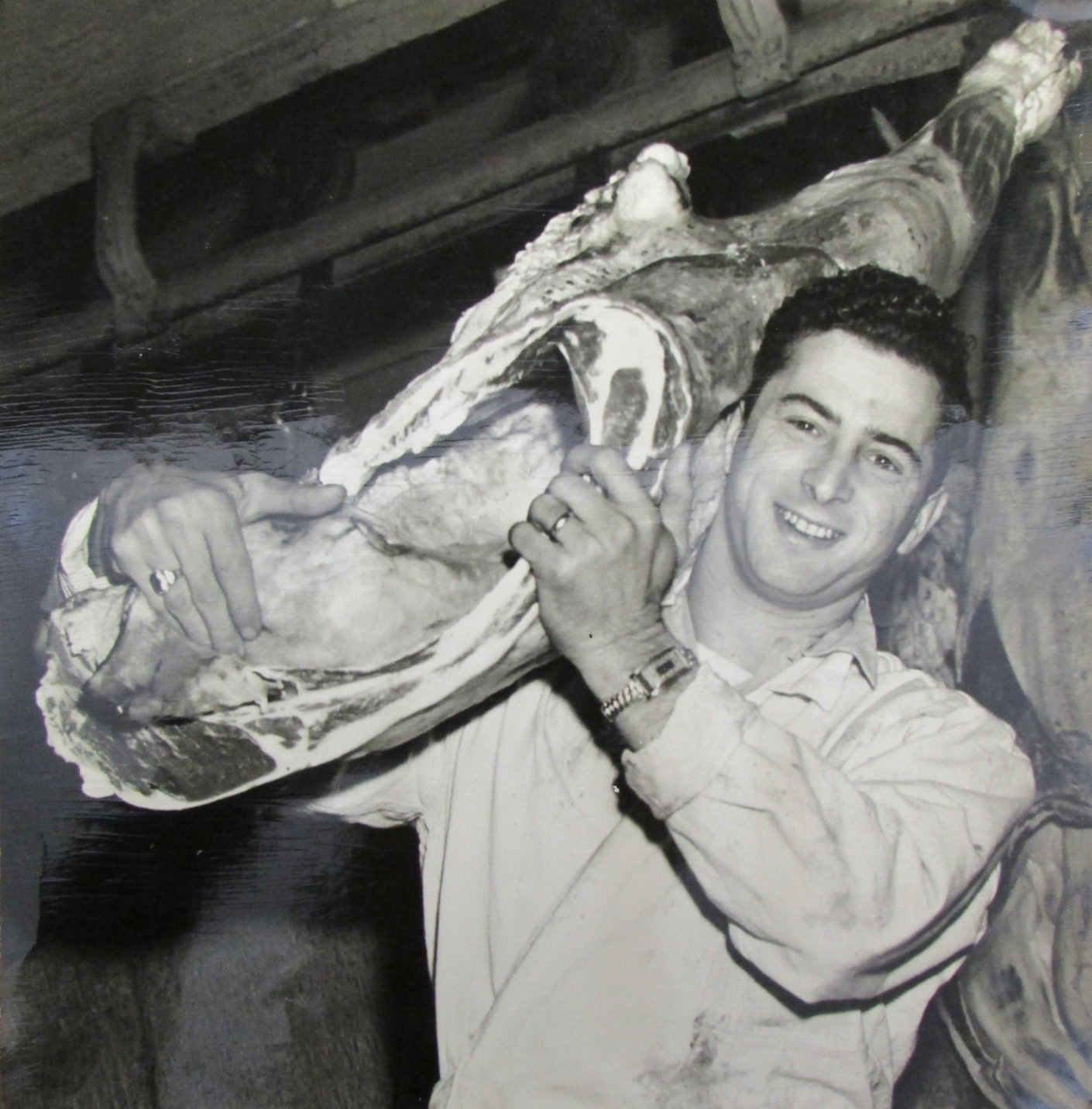
Billy “The Kid” Martin remembered working in the Butchertown slaughterhouses with Pieretti during the off-season.
“Killing cattle by hitting them in the head as they were driven through a chute at the packing-house,” Martin said. “It was the only way they knew to do it in those days. And that Pieretti, he was some strong little guy. He could bring ‘em to their knees with one hand. It took me two.”
Mr. Baseball
Pieretti pitched well for the semi-pros, but the hometown Seals and Oaks considered him too small to sign. “The gamecock pitcher from North Beach,” he was scorned by both the Seals and Oaks. “Go home, kid. We don’t need a batboy,” he was told.
The Reds weren’t interested in a “Pee Wee” like him either — but Mickey Shader, a scout for the Reds, recognized a talent that couldn’t be measured in regular terms and got him a job with the El Paso semi-pro team. Shader arranged for Pieretti to pitch for El Paso in the Class C Arizona-Texas League, where he won 16 games in 1941. Ironically, Pieretti’s first professional win was against Shader’s team.
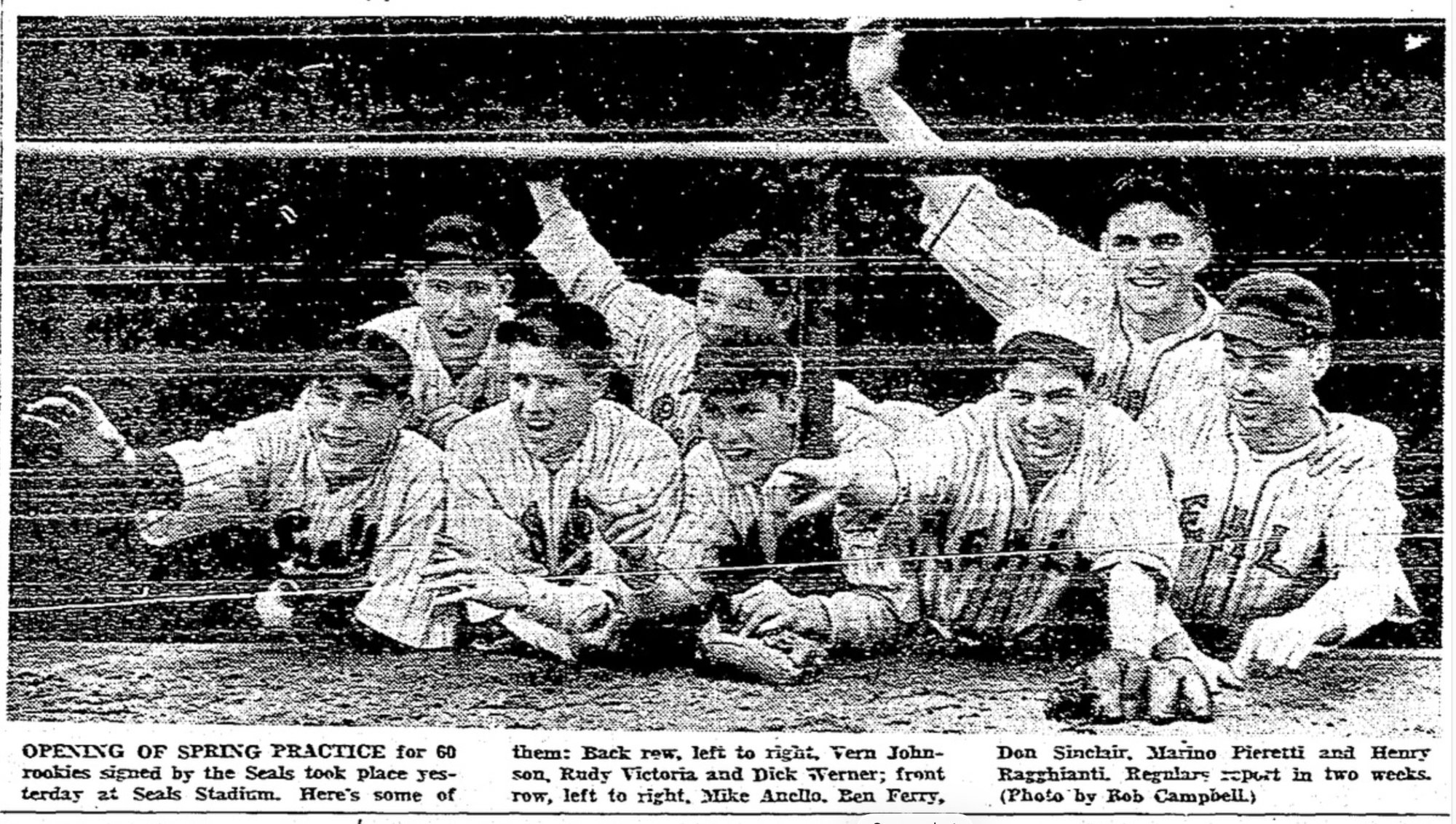
“I was so darned happy I bounced up and down like a pogo stick when I struck out the last batter,” Pieretti said.
Pieretti played sandlot and semi-pro every day during the contract dispute in 1942 and said, “I love baseball like nobody’s business. When I go to bed, I lie awake thinking about it. I dream about it. And when I wake up the next morning, I can eat baseball for breakfast.”
“He wasn’t afraid of anybody, and he pitched the same way,” Benedetti said. “When he was on that mound, he was the boss.”
“He wasn’t overly fast. He would throw a lot of stuff up,” Charles Silver said. “He would curveball you, knuckleball you, screwball you, do anything to get you out. He’d run in front of you when you went to first base, try to trip you. He’d do anything.”
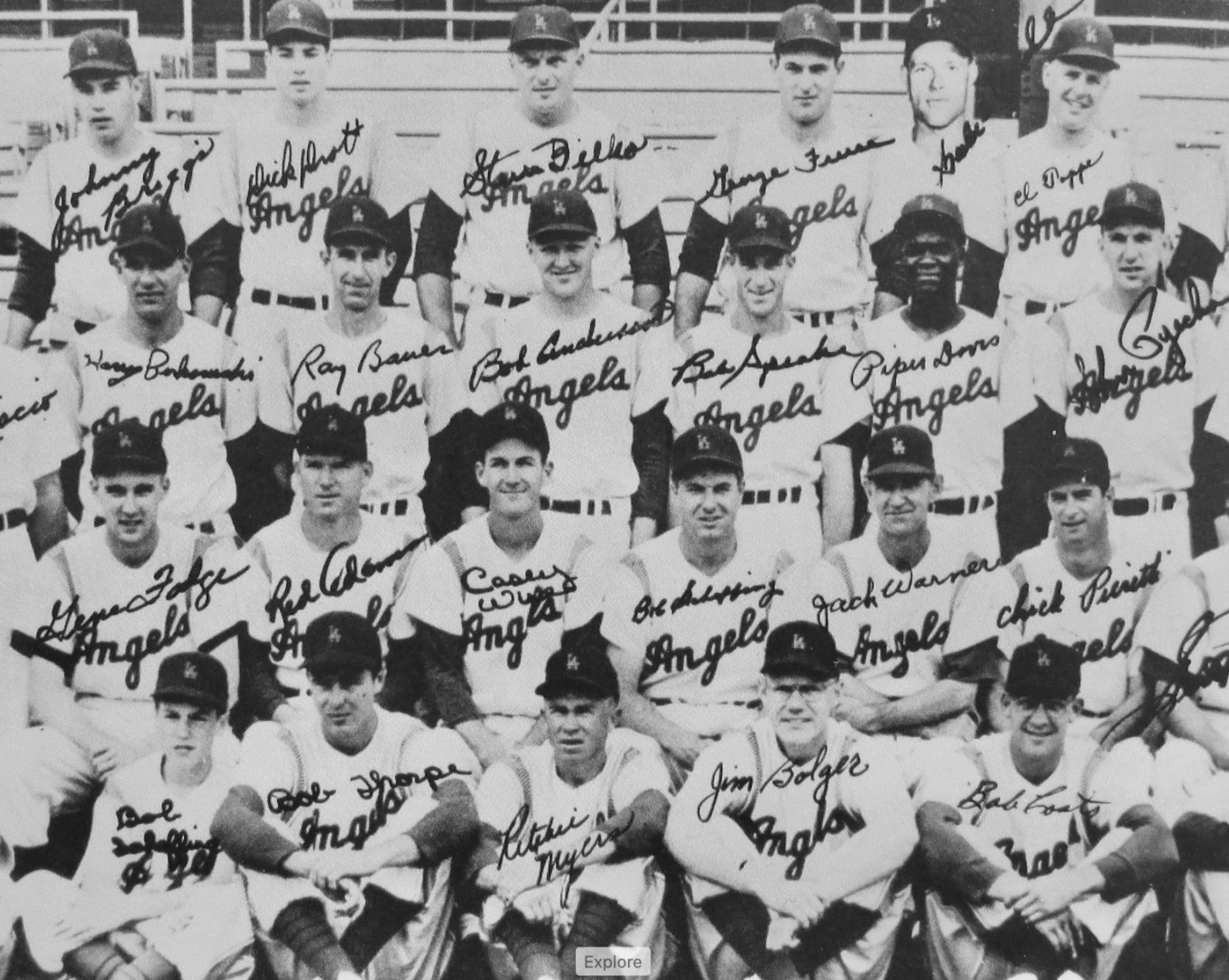
Pieretti’s seven wins and nine losses with the L.A. Angels don’t tell the whole story: “He was a workhorse, pitching 156 innings as a starter and reliever.” He knew that pitching was not about overpowering batters, but outsmarting them. That’s what made him such a great coach for the younger players.
"If I had to pick a Mr. Baseball, it would be Marino Pieretti. Hands down." —Dante Benedetti
He was still pitching for the Cleveland Indians on June 20, 1950, when DiMaggio got his 2,000th career hit. After the ball was returned to him, Pieretti walked off the mound and handed the ball to DiMaggio, his old North Beach pal.
"If I had to pick a Mr. Baseball, it would be Marino Pieretti," said Dante Benedetti. "Hands down."
When his professional baseball career ended in 1958, Pieretti returned to managing his San Francisco bar, Raans at 4461 Mission St., and later worked as a sales manager for Associated Freight Lines and Arrow Trucking Company. He was also frequently an accordionist at local Italian weddings.
Baseball At Crocker Amazon
Many of Pieretto’s fellow North Beach Italians moved south to the Outer Mission and Excelsior. Will Connolly described as the “French carrot and Swiss chard area on the south end of the City where Italian-Americans grow wonderful vegetables — it’s just above the artichoke belt” in the San Francisco Chronicle in 1950.
That’s where they raised their families and attended Corpus Christi or the Church of the Epiphany. At the end, they’d be buried at Holy Cross Cemetery in Colma after funeral services at the Valente, Marini, Perata funeral home on Mission Street, now the site of affordable housing.
Pieretti loved sharing his baseball knowledge with kids, which he did regularly at Crocker Amazon Park. Pieretti and Frank Strazzullo often conducted baseball clinics together. Dino Restelli remembered: “Every day, Pieretti would be out there from three o’clock until eight at night working with the kids. He was always willing to help somebody.”
“The thing I enjoyed was taking those kids, putting them in a park and teaching them fundamentals, discipline, seeing them develop,” Pieretti said.
“They’d come from all over the state,” Strazzullo said. “We showed them the basics and then tell them to go home and practice. We had some promising kids.” Strazzullo remembered Joe Morgan, a future Hall of Famer, for one, and Walt “No Neck” Williams, too.
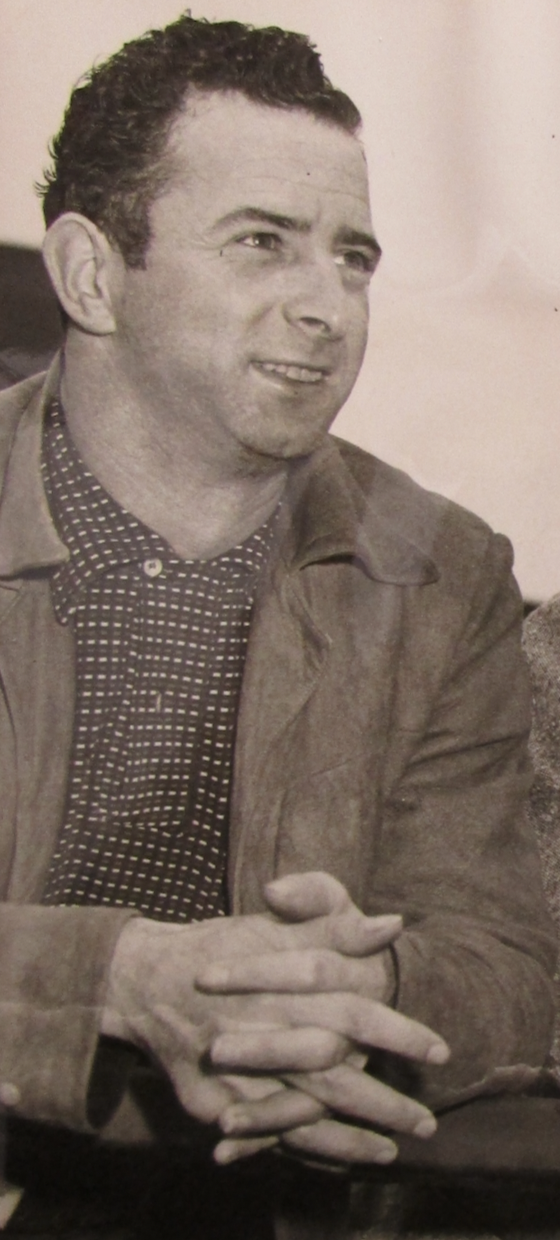
Even while dealing with cancer, Pieretti conducted youth baseball clinics and coached University of San Francisco pitchers.
In 1980, on a sunny Saturday in February, a ceremony was held to rename Crocker Amazon Playground’s Field No. 1 the “Marino Pieretti Baseball Field.”
Supervisors Quentin Kopp and Don Horanzy officiated. Kopp, who had known Pieretti since 1953, proclaimed, “I think everybody is of one view today. It brings together what I think are the two greatest institutions in the whole world — San Francisco and baseball.”
Pieretti, who by that time was frail and weakened by illness, sat quietly during the proceedings. After being called to speak, he thanked the Rec and Park Commission. He recognized his family for being there during good times and bad. But the longer he held the microphone, the stronger he seemed.
To the San Francisco Umpires Association, he said, “I’ve argued with you for 45 years. You’ve never been wrong.”
To all his young ballplayers — all 10,000 of them over thirty-four years — he said: “I’m very deeply honored and impressed by what you’ve done and what you’ve learned.”
Remembering Chick
Pieretti died on Jan. 30, 1981. But the Friends of Marino Pieretti luncheons continued. Their mission expanded to helping the University of San Francisco baseball program, which Pieretti and Dante Benedetti had long been associated with. Their gatherings naturally became part of the San Francisco Old Timers Baseball Association’s blended family.
On May 17, 1981, the Giants honored Pieretti when they celebrated Italian American Day at Candlestick Park. In June 1982, it was “Marino Pieretti Day” at Big Rec in Golden Gate Park with a doubleheader between New Pisa and the El Cerrito Cards.
On Dec. 18, 1982, the Friends of Marino Pieretti ran a horse at Bay Meadows in honor of Pieretti. Joe DiMaggio was there. He said, “If it’s for Marino, I gotta be there.”
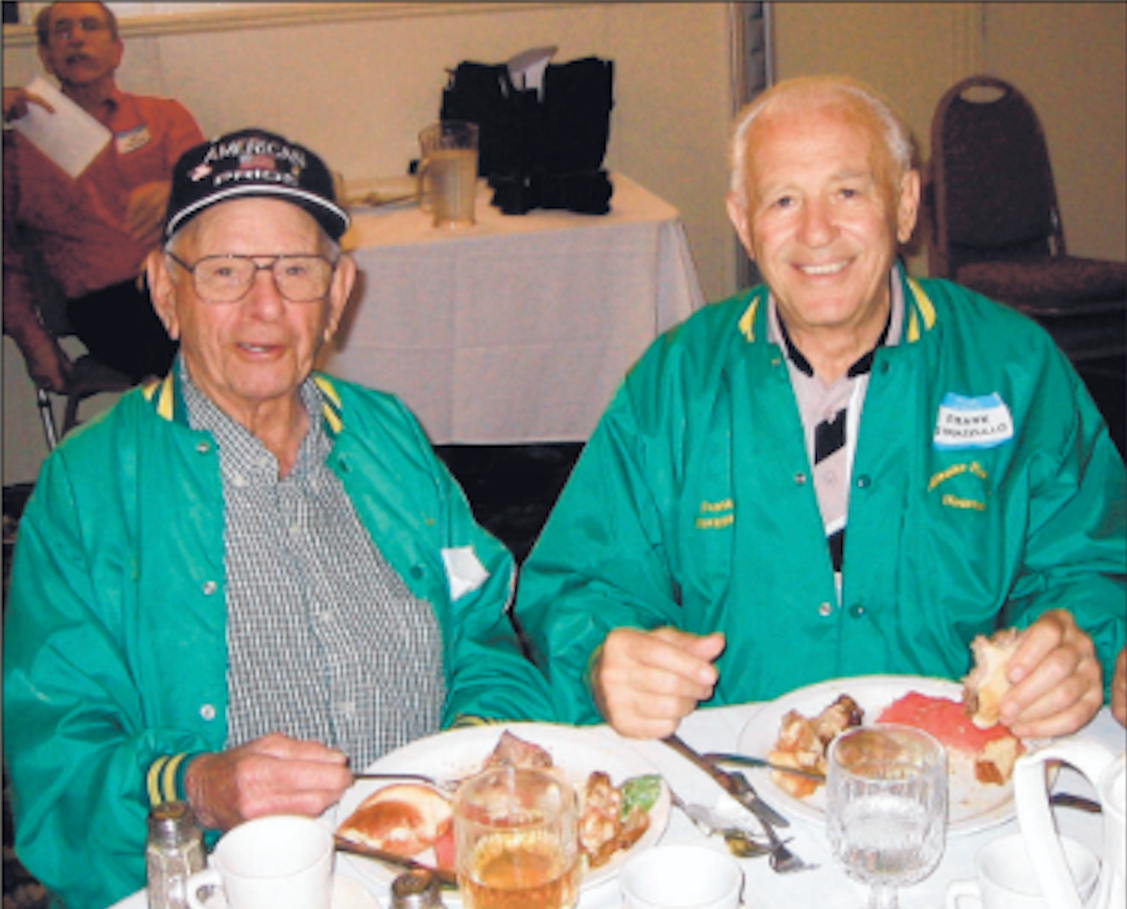
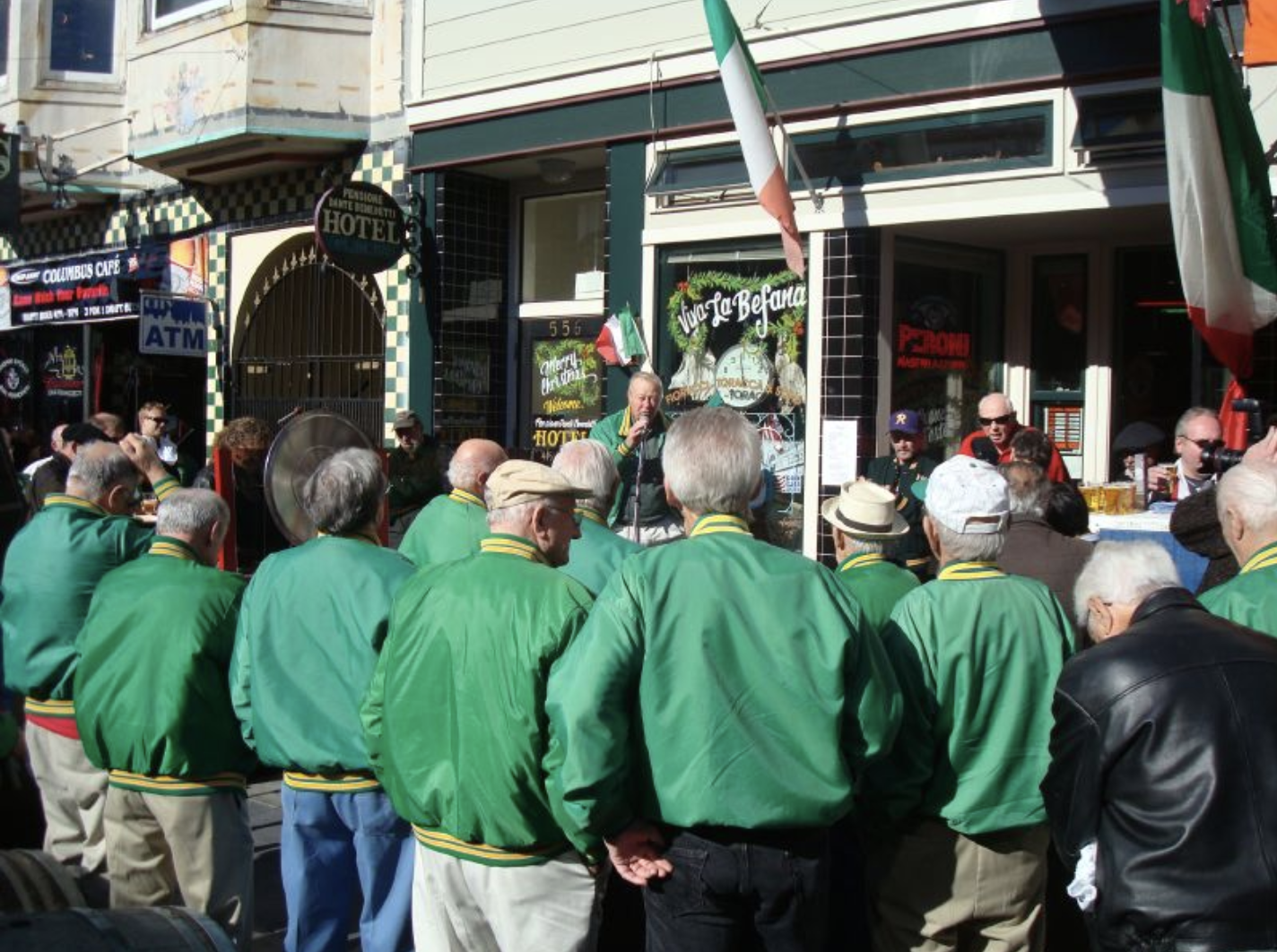
Dante Santora enjoys lunch with his friend, Frank Strazzullo, the coordinator for the Friends of Marino. Right: Friends of Marino Pieretti's Dante Benedetti Dedication at New Pisa Restaurant in 2008.
Green jackets are presented to members at the Friends' year-end luncheon. They handed out more than 4,500 green jackets over 39 years. These days, when not at lunch, you might find them wearing their green jackets and paying respects at their friends' memorial services.
But they still meet — third Thursdays, 11:30 a.m. — at Nick's Rockaway in Pacifica. “There are no dues. No cards. No by-laws. Good guys — some 150 each meeting — just drop in and enjoy the camaraderie and nostalgia, while remembering what Pieretti meant to them," Bucky Walter wrote in the Sunday Examiner and Chronicle in 1981. Joe Futernick "like many others, admired Pieretti's lifelong fierce devotion to baseball.”
Pieretti’s Diamond
After twenty years of use, Pieretti’s field had become a neglected mess. Neighbors and community members kept complaining. And, since it was an election year, something got done.
On Aug. 10, 1999, Mayor Willie Brown officiated when they broke ground to “prep and grade the field and plant new, durable bluegrass-rye sod — just like the Giants play on at Candlestick Park.” It was to be completed — in record time — by the end of September, as reported by the San Francisco Examiner. The Giants Community Fund and the Good Tidings Foundation would provide funding to help the cause.
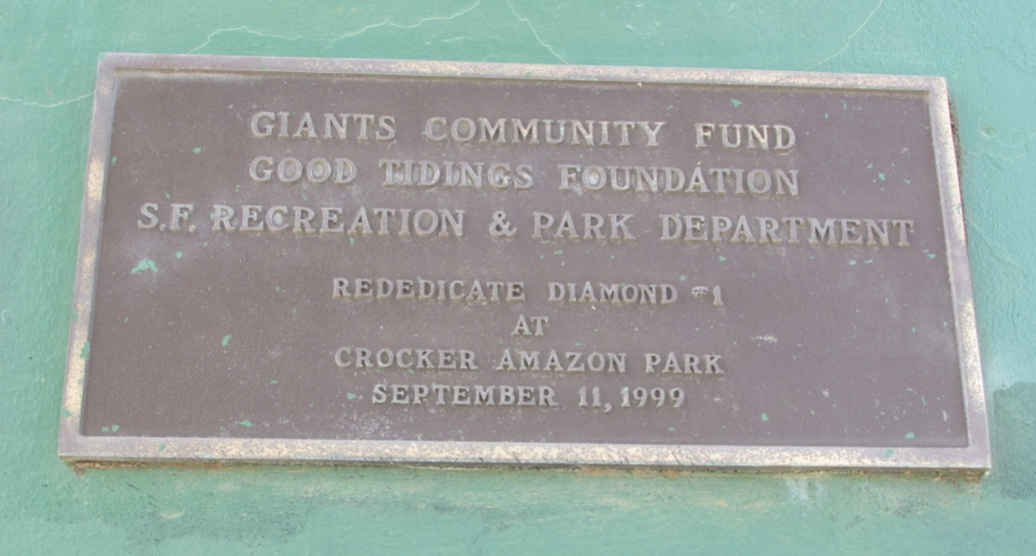
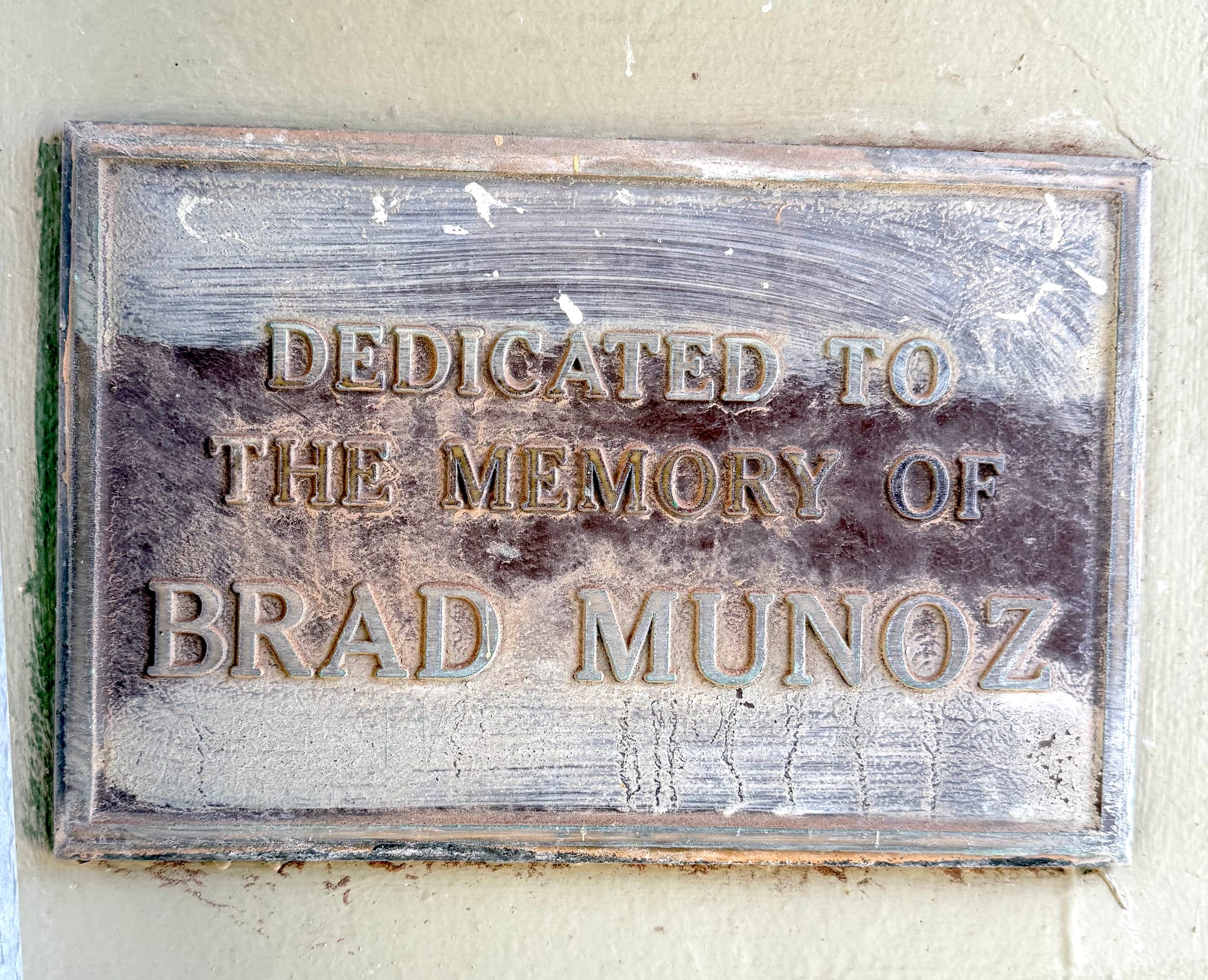
The other plaques at Crocker Amazon Playground's Field No. 1. | Lisa Dunseth/Ingleside Light
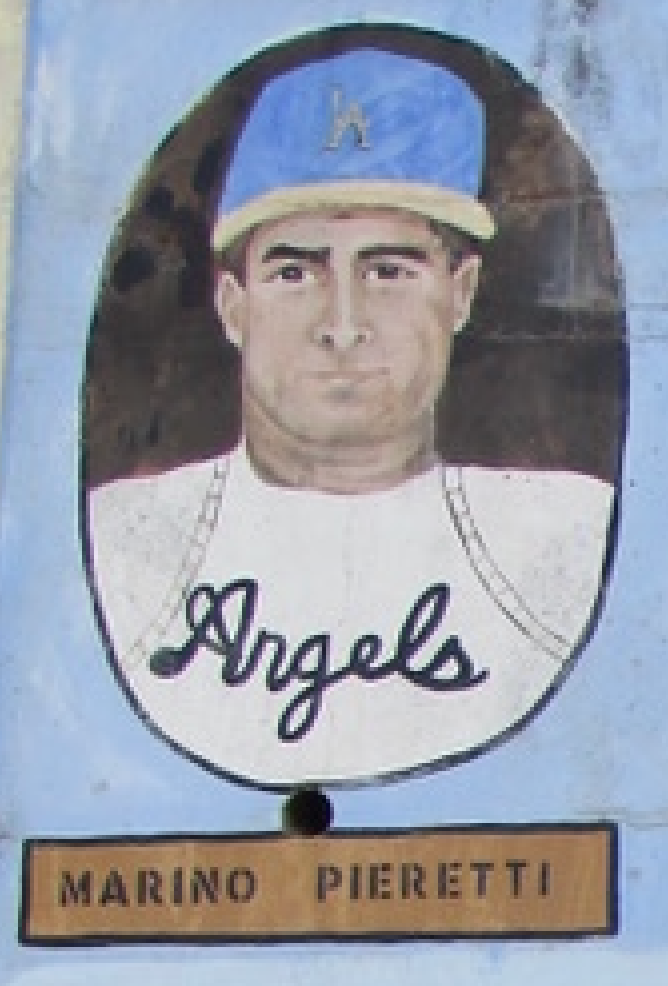
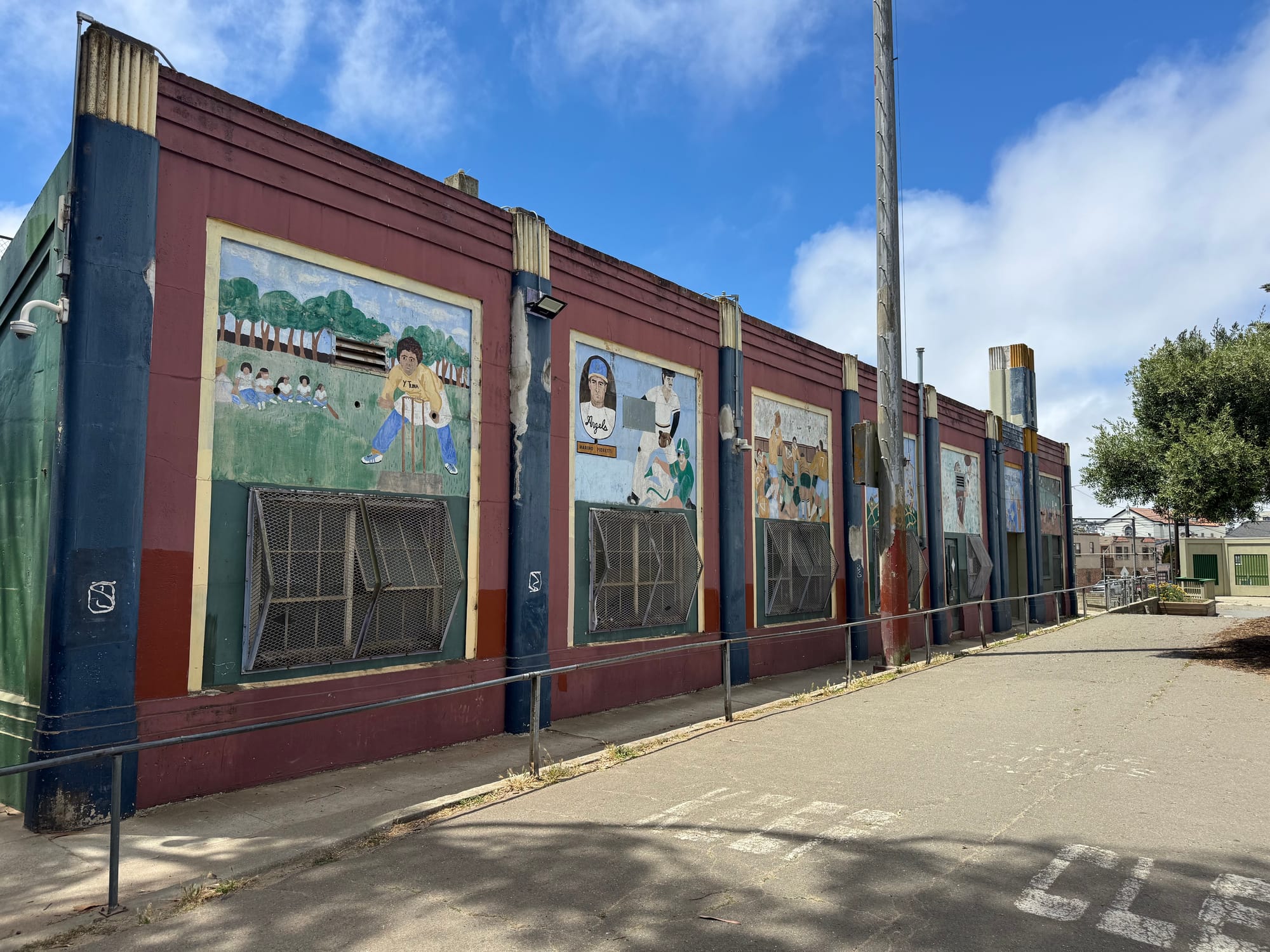
The circa 1980 mural on the baseball stadium at Crocker Amazon Playground. | Lisa Dunseth/Ingleside Light
Joel Robinson from Rec and Park said, “This partnership is necessary to provide quality athletic opportunities for people across the city,” so the baseball and softball traditions could continue at Crocker Amazon.
The new plaque still reads: “Giants Community Fund, Good Tidings Foundation, S.F. Recreation & Park Department, Rededicate Diamond #1 At Crocker Amazon Park, September 11, 1999.” (There is also a plaque for Brad Munoz, perhaps a story for another day.)
Rec and Park spokesperson Daniel Montes told The Ingleside Light that the department plans “to rename the full complex the Willie Mays Fields of Champions as part of the renovation, ball field No. 1 will continue to honor Pieretti and bear his name.”
How Pieretti will be memorialized once the field is renovated is unknown at this time.
“Nostalgia is the cement that holds together The City despite vast, sweeping changes, from the loss of old traditional values to growing clutter of the skyline to incursion by newcomers, rootless and disoriented,” sports reporter Bucky Walter wrote in September 1984.


